9/11, 25 Years Later: 25 Essential Documentaries & Podcasts
It’s been a quarter-century since the 9/11 attacks. These documentaries and podcasts probe that fateful day, investigate the cascade of decisions that followed and trace the lasting impact on America and the world.

September 10, 2026
Share
It’s been 25 years since Al Qaeda operatives carried out the deadliest terror attacks on the U.S. in the country’s history, killing nearly 3,000 people and injuring thousands more.
During that quarter-century, the legacy of the Sept. 11, 2001, attacks and the ensuing “war on terror” has taken on complex and far-reaching dimensions — from deadly conflicts in Afghanistan, Iraq and beyond to distrust and polarization at home.
We’ve collected 24 documentaries and one podcast episode — selected from more than two decades of extensive FRONTLINE reporting — that probe that fateful day, investigate how the U.S. government responded and trace the lasting impact on America and the world.
These essential stories chronicle the intelligence failures that preceded and followed Sept. 11; the toll of the wars in Afghanistan and Iraq on civilians there, as well as the impact on U.S. troops; the CIA’s use of “enhanced interrogation techniques” widely criticized as torture; the rise of the U.S.’ covert drone program; the deployment of a secret mass surveillance apparatus within the U.S.; the emergence of ISIS; and an erosion of the American public’s trust in the U.S. government and institutions.
They’re all available to stream, for free.
Watch the Documentary
Hunting bin Laden (2001)
In the hours after the Sept. 11, 2001, attacks, the CIA and FBI briefed political leaders in Washington that their search for the terrorists responsible was focused on one name above all others. FRONTLINE aired this documentary, a powerful first draft of history, just two days later. With opening and closing commentary from legendary journalist Bill Moyers, this Sept. 13, 2001, report from director and producer Martin Smith and correspondent Lowell Bergman built on an investigation into bin Laden’s terror network that had aired two years earlier. Hunting bin Laden is a time capsule of the shock, grief and horror that gripped the U.S. when the twin towers fell — and of the emergence of one central question: Why did U.S. intelligence agencies fail so tragically to “connect the dots” and uncover this enormous operation in time?
Watch the Documentary
The Man Who Knew (2002)
Among those who died when the twin towers fell on 9/11 was a former FBI counterterrorism agent who may have known more about Osama bin Laden than any other person in America. John O’Neill had led a six-year fight to track down and prosecute Al Qaeda operatives around the world, but he was a controversial figure inside the agency. Filmmakers Michael Kirk and Jim Gilmore chronicled O’Neill’s warnings about the threat posed by Al Qaeda before he died in an attack carried out by that very organization.
Watch the Documentary
Faith and Doubt at Ground Zero (2002)
For many Americans, Sept. 11, 2001, didn’t only prompt questions about national security, terrorism and foreign policy. The attacks also sparked profound spiritual questions about God’s presence — or absence — that day, the nature of good and evil, and the potential for both within religion itself. Faith and Doubt at Ground Zero is an intimate and profound investigation of the spiritual aftershocks of 9/11. Through interviews with victims’ families and World Trade Center survivors, priests, rabbis, Islamic scholars, atheists and agnostics, writers and thinkers, producer Helen Whitney examined how the religious beliefs — and unbelief — of Americans had been challenged since 9/11.
Watch the Documentary
In Search of Al Qaeda (2002)
In December 2001, as American forces blasted mountain hideouts in the Tora Bora region of Afghanistan, hundreds of Al Qaeda fighters fled, seemingly disappearing into thin air. Martin Smith, Marcela Gaviria and Scott Anger traveled to the Gulf of Oman, into the border regions and cities of Pakistan, and on to Saudi Arabia and Yemen to investigate what happened to Al Qaeda. Where did its members find sanctuary? Had the network been scattered and rendered ineffective — or were they regrouping and planning more attacks?
Watch the Documentary
Truth, War & Consequences (2003)
Martin Smith and Marcela Gaviria traced the U.S.-led invasion of Iraq back to the days immediately following 9/11, when then-Defense Secretary Donald Rumsfeld ordered a special intelligence operation to quietly begin looking for evidence that would justify a war to remove Iraq’s leader Saddam Hussein from power. The film asked tough questions about the George W. Bush administration’s claims that Hussein posed an imminent threat to the Western world and traced how inadequate planning for the post-Hussein era created conditions for continuing violence.
Watch the Documentary
The Soldier’s Heart (2005)
A 2004 U.S. Army-commissioned study found that one in six veterans from the wars in Iraq and Afghanistan was suffering from PTSD. Yet fear had kept many from seeking help. Filmmaker Raney Aronson-Rath, now FRONTLINE’s executive producer, explored how, for some, the return home could be as painful as war itself and asked whether the U.S. government was doing enough to help.
Watch the Documentary
The Dark Side (2006)
In the days after 9/11, Vice President Dick Cheney offered the American public a glimpse into how the George W. Bush administration would respond. The U.S. government, he warned, would have to operate on the “dark side.” From veteran FRONTLINE filmmaker Michael Kirk and his team, this documentary chronicled Cheney’s role as the chief architect of what would come to be called the “war on terror”; his battle with CIA Director George Tenet for control of the “dark side”; and the assertions that preceded the U.S.-led invasion of Iraq.
Watch the Documentary
Obama's War (2009)
Martin Smith and Marcela Gaviria traveled across Afghanistan and Pakistan to see firsthand how President Barack Obama’s counterterrorism strategy was unfolding. In addition to interviewing top U.S. commanders on the ground, the film team embedded with a Marine company in Helmand, then the most lethal battlefield in the U.S.-led war in Afghanistan. FRONTLINE found the Marines trying to act as armed diplomats, attempting to build trust for badly needed economic development.
Watch the Documentary
Top Secret America (2011)
In the wake of 9/11, the Bush administration immediately began developing a covert anti-terror apparatus that was huge — and that would long remain hidden. Released a decade after the attacks, this documentary from filmmaker Michael Kirk and his team documented how reporters including The Washington Post’s Dana Priest helped to uncover this “top secret America” — from a covert international war waged by the CIA that included drone strikes, black site prisons, and “enhanced interrogation techniques,” to a domestic surveillance program that secretly authorized the National Security Agency to intercept certain telephone calls and emails of American citizens without a warrant.
Watch the Documentary
Kill/Capture (2011)
Following the May 2011 death of Osama bin Laden, Dan Edge and Stephen Grey investigated the United States’ campaign of targeted killing. The filmmakers made contact with Taliban leaders and the U.S. Special Forces targeting them in the border regions of Afghanistan and Pakistan, examining reports of civilian casualties. The documentary raised questions about long-term consequences and whether, after almost 10 years of war, the U.S. could leave Afghanistan.
Watch the Documentary
Top Secret America: 9/11 to the Boston Bombings (2013)
In the aftermath of the April 2013 Boston Marathon bombings, the threat of terrorism again confronted Americans. An updated version of 2011’s Top Secret America, this documentary from the same team looked at the journey from 9/11 to the Boston Marathon bombings. The updated film explored questions about whether the hundreds of billions of dollars spent since 9/11 on counterterrorism efforts in U.S. had made the country safer.
Watch the Documentary
United States of Secrets: Part 1 (2014)
Watch the Documentary
United States of Secrets: Part 2 (2014)
When the National Security Agency contractor Edward Snowden downloaded and leaked tens of thousands of documents about a secret, extensive U.S. government surveillance program, it sparked a fierce debate over privacy, technology and democracy in the post-9/11 world. In this two-part series, FRONTLINE traced the lengths taken to hide the program from the public. Part 1, “The Program,” from Michael Kirk, Jim Gilmore and Mike Wiser, explored a massive domestic-surveillance dragnet designed to disrupt terrorist attacks before they occurred that relied on the warrantless collection of millions of phone records, including those of American citizens. Part 2, “Privacy Lost,” from Martin Smith, investigated the ways Silicon Valley played a role in the NSA’s dragnet and how tech giants reacted when the government asked them to turn over data on millions of ordinary Americans.
Watch the Documentary
Losing Iraq (2014)
As ISIS burst onto the world stage and seized vast swaths of territory in Iraq more than two years after President Obama pulled U.S. troops out, Michael Kirk, Jim Gilmore and Mike Wiser traced how the U.S.-led invasion of Iraq, its aftermath and decisions by the Bush and Obama administrations contributed to Iraq reaching that point.
Watch the Documentary
The Rise of ISIS (2014)
Reporting from Iraq as U.S. airstrikes against ISIS began, Martin Smith examined the buildup of unheeded warnings, failures and missed opportunities that allowed Al Qaeda in Iraq to become ISIS. From Smith and Linda Hirsch, the film offered a revelatory look at how ISIS grew, gained strength in Syria, and how it developed and funded its brutal strategy.
Watch the Documentary
Secrets, Politics and Torture (2015)
The story of the fight over the CIA’s controversial “enhanced interrogation” methods, now widely described as torture, used on detainees at U.S.-operated black sites. Based on declassified documents and interviews with key political leaders and CIA insiders, this film from Michael Kirk, Mike Wiser and Jim Gilmore unspooled dueling versions of history: one laid out by the CIA, which maintained its program was successful in combating terrorism, and one by the Senate, whose investigation found the program to be brutal, mismanaged and ineffective.
Watch the Documentary
The Secret History of ISIS (2016)
How was Abu Musab al-Zarqawi, once a small-time criminal, able to build the foundation for the brutal terrorist organization that would become ISIS? Michael Kirk, Mike Wiser and Jim Gilmore examined how Zarqawi developed what would become the ISIS playbook under the U.S. government’s nose. The film also explored how a successor, Abu Bakr al-Baghdadi, followed Zarqawi’s method to make ISIS even more powerful.
The Weight of Dust (2018)
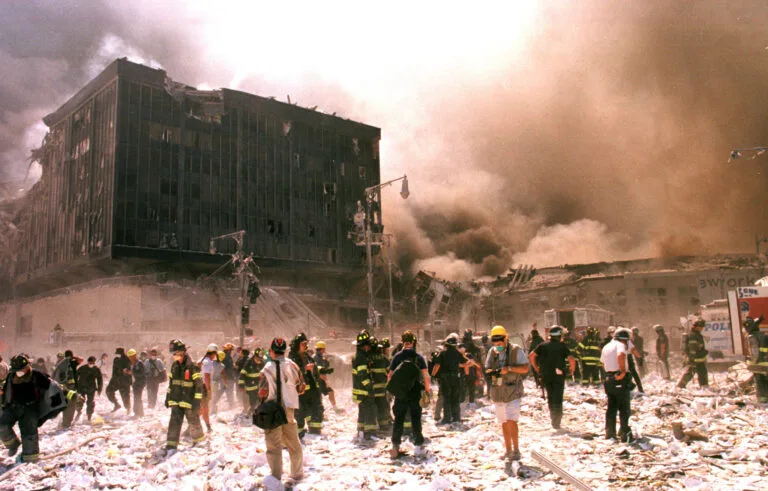
Scott Gaines was a first responder on 9/11. When he retired a couple of months later, he thought he’d escaped the aftermath unscathed. Like many other 9/11 first responders, he would later be diagnosed with cancer. Reported by his daughter, producer Amy Gaines McQuade, this episode of The FRONTLINE Dispatch podcast is a powerful meditation on the lingering fallout of one of the deadliest days in American history, a window into the government’s response over the years to illnesses believed to be related to 9/11, and a profound portrait of the relationship between one father and his daughter.
Watch the Documentary
Taliban Country (2020)
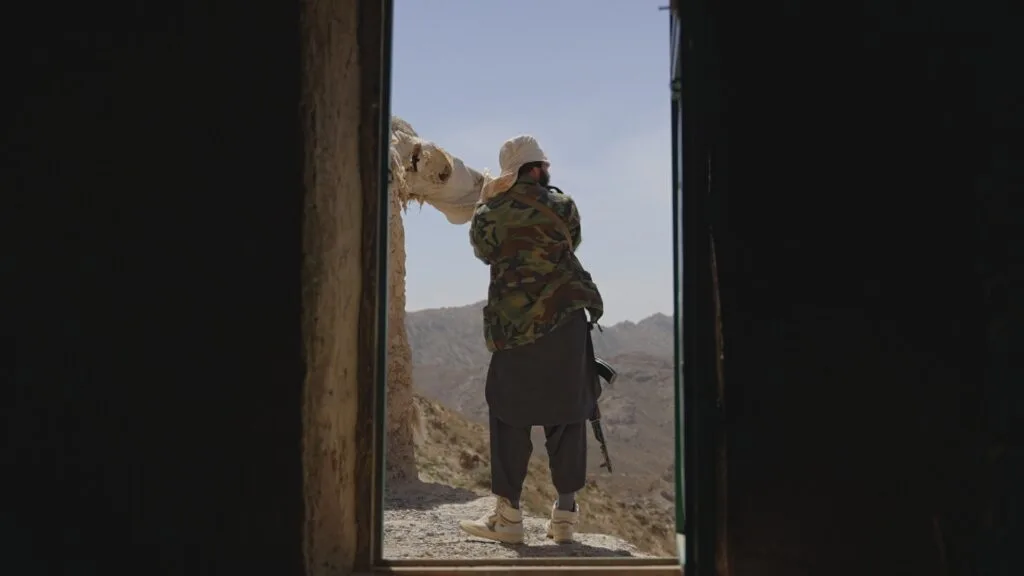
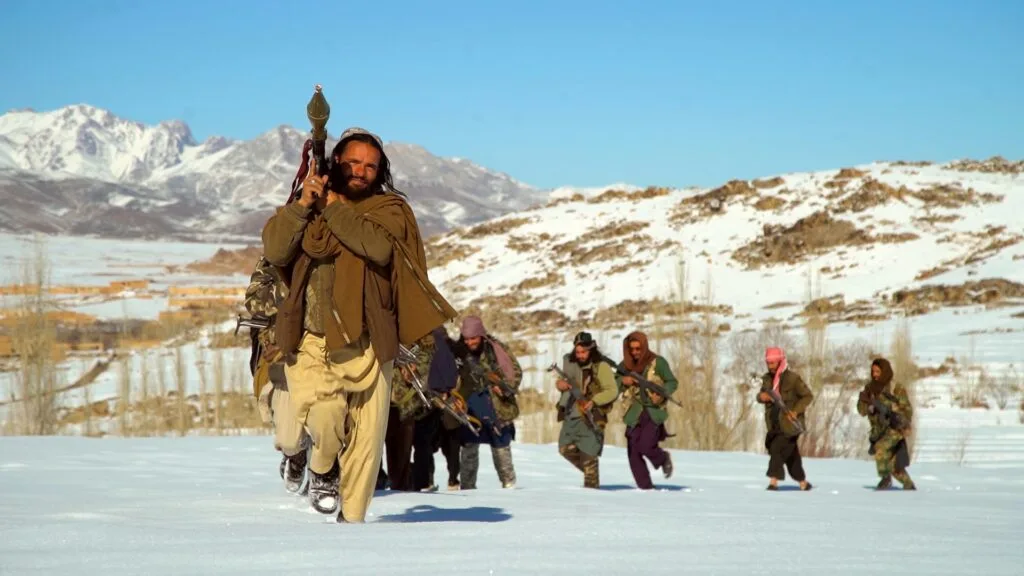
Najibullah Quraishi, a journalist born and raised in Afghanistan, provided an on-the-ground look at the Taliban’s resurgence in the country and the threat posed by ISIS in this film with Jamie Doran — the team also behind 2015’s ISIS in Afghanistan. Quraishi interviewed Mullah Abdul Ghani Baradar, the Taliban’s chief negotiator in peace talks with the Trump administration, pressing Baradar on how the Taliban would exercise its power if the U.S. left and whether the group had moderated its hardline policies toward women and girls.
Watch the Documentary
Once Upon a Time in Iraq (2020)
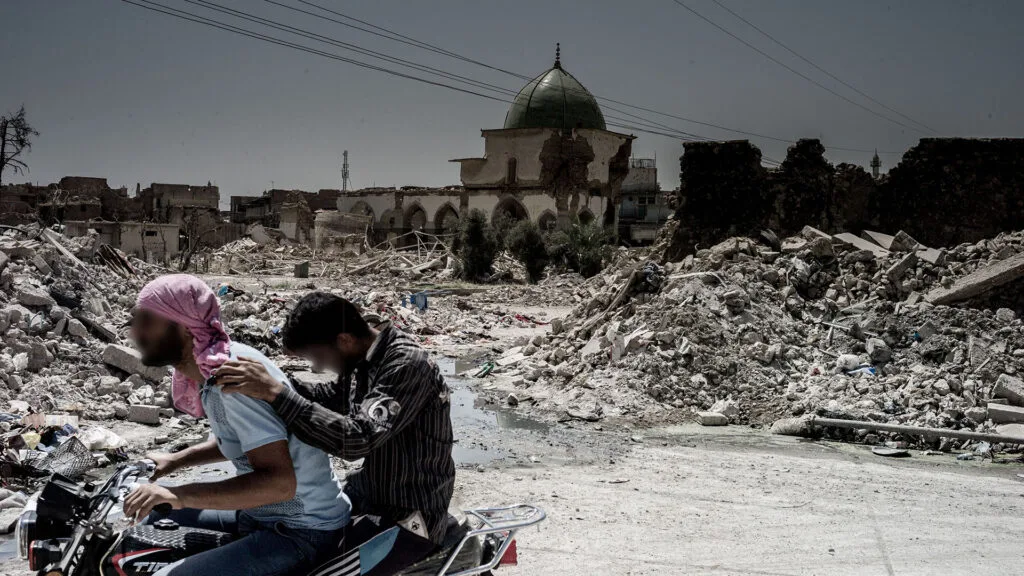
The story of the Iraq War and its aftermath, told by those who lived through it — from a woman who was 6 years old when coalition troops entered Baghdad to a cadet in the Iraqi army who survived an ISIS massacre that killed 1,700 of his peers. In this two-hour documentary from James Bluemel, Iraqis shared their personal accounts of life under Saddam Hussein, the U.S.-led invasion of their country and the subsequent years of chaos.
Watch the Documentary
Leaving Afghanistan (2021)
With President Joe Biden ordering the U.S. withdrawal from Afghanistan after nearly 20 years of war, Najibullah Quraishi returned to report with Jamie Doran on the Taliban’s advance, Iran’s ambitions and rising fears of sectarian civil war in an increasingly unstable country.
Watch the Video
In the Shadow of 9/11 (2021)
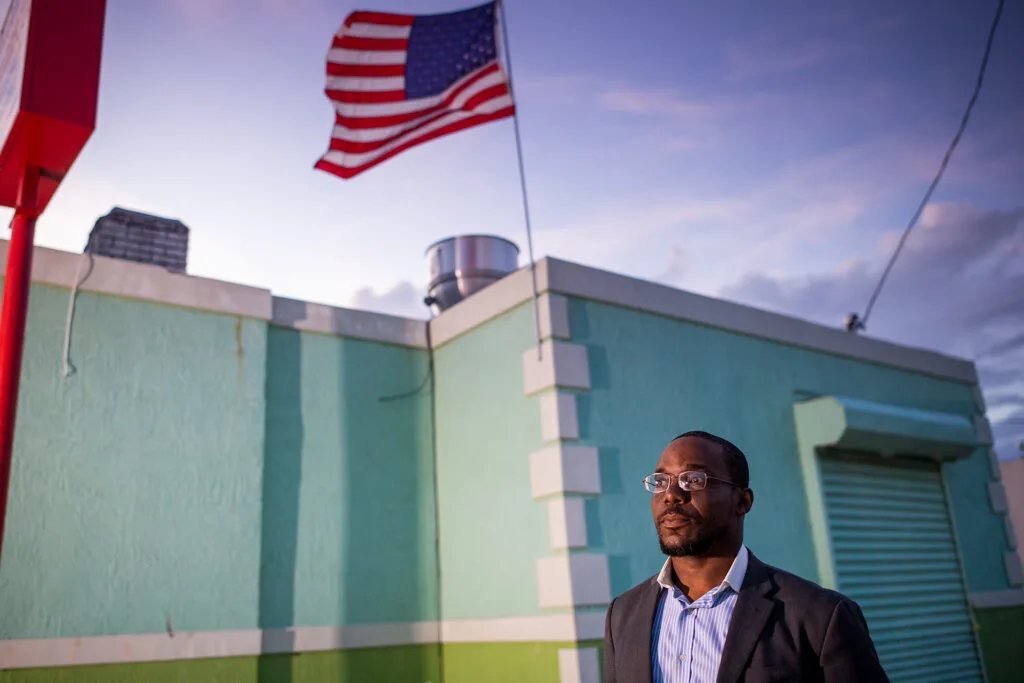
This two-hour film from Dan Reed explored the case of the Liberty City Seven, a group of Black men from Miami accused of planning an Al Qaeda plot to blow up U.S. buildings. Their indictment marked the federal government’s first major post-9/11 counterterrorism sting within the U.S., although the men had no weapons and never communicated with anyone from Al Qaeda. The film raised questions about the FBI’s use of informants and offered a window into the desperate search to confront the terror threat at home.
Watch the Documentary
America After 9/11 (2021)
From Michael Kirk, Mike Wiser, Philip Bennett, Jim Gilmore and Gabrielle Schonder, this two-hour documentary traced the U.S. response to the Sept. 11, 2001, terrorist attacks and the devastating consequences across four presidencies. Drawing on new interviews and dozens of documentaries Kirk and his team made in the years since 9/11, the film re-examined the decisions that ushered in an era of fear, division and mistrust, exposing the roots of the Jan. 6 insurrection and the ongoing challenge 9/11 poses for the U.S. president and the country.
Watch the Documentary
Taliban Takeover (2021)
Najibullah Quraishi investigated uncertainty and fear among the Afghan people following the U.S. withdrawal, and revisited the lead-up to the U.S. defeat and the Taliban’s return, in this documentary produced by Jamie Doran.
Watch the Documentary
Afghanistan Undercover (2022)
This investigation from Ramita Navai and Karim Shah went inside the Taliban’s crackdown on women in Afghanistan following the group’s takeover, revealing the harsh realities of life for women under the Taliban’s rule.
Watch the Documentary
America and the Taliban: Part 1
Watch the Documentary
America and the Taliban: Part 2
Watch the Documentary
America and the Taliban: Part 3
How did the U.S. lose the war in Afghanistan? Who bears responsibility? And what has been the human cost? Drawing on decades of on-the-ground reporting and interviews with Taliban and U.S. officials, this epic three-part investigation from Marcela Gaviria, Martin Smith and Brian Funck traced how America’s 20-year war in Afghanistan culminated in Taliban victory, and examined the missteps and consequences.
In addition to streaming above, as part of our digital collection and in the PBS App, many of these documentaries are available to watch now on FRONTLINE’s YouTube channel.
Journalism powered by your support — and accessible to all.
Watching our “Scammed” documentary revealing how the global scam industry operates? Exposing the truth is where accountability begins. Help keep reporting like this paywall-free for everyone with a gift of $5 or $10 today.

Senior Digital Writer, FRONTLINE
Support provided by:
Learn More
Related Documentaries

Latest Documentaries

Related Stories
The Weight of Dust: 25 Years After 9/11
Related Stories
The Weight of Dust: 25 Years After 9/11
Explore
Policies
Teacher Center

Jon and Jo Ann Hagler on behalf of the Jon L. Hagler Foundation
Corey David Sauer
Koo and Patricia Yuen
FRONTLINE is a registered trademark of WGBH Educational Foundation. Web Site Copyright ©1995-2025 WGBH Educational Foundation. PBS is a 501(c)(3) not-for-profit organization.
Funding for FRONTLINE is provided through the support of PBS viewers and by the Corporation for Public Broadcasting, with major support from Ford Foundation, and Fialkow Family Foundation. Additional funding is provided the Abrams Foundation, John D. and Catherine T. MacArthur Foundation, Park Foundation, Heising-Simons Foundation, and the FRONTLINE Trust, with major support from Jon and Jo Ann Hagler on behalf of the Jon L. Hagler Foundation, and Corey David Sauer, and additional support from Koo and Patricia Yuen. FRONTLINE is a registered trademark of WGBH Educational Foundation. Web Site Copyright ©1995-2026 WGBH Educational Foundation. PBS is a 501(c)(3) not-for-profit organization.