



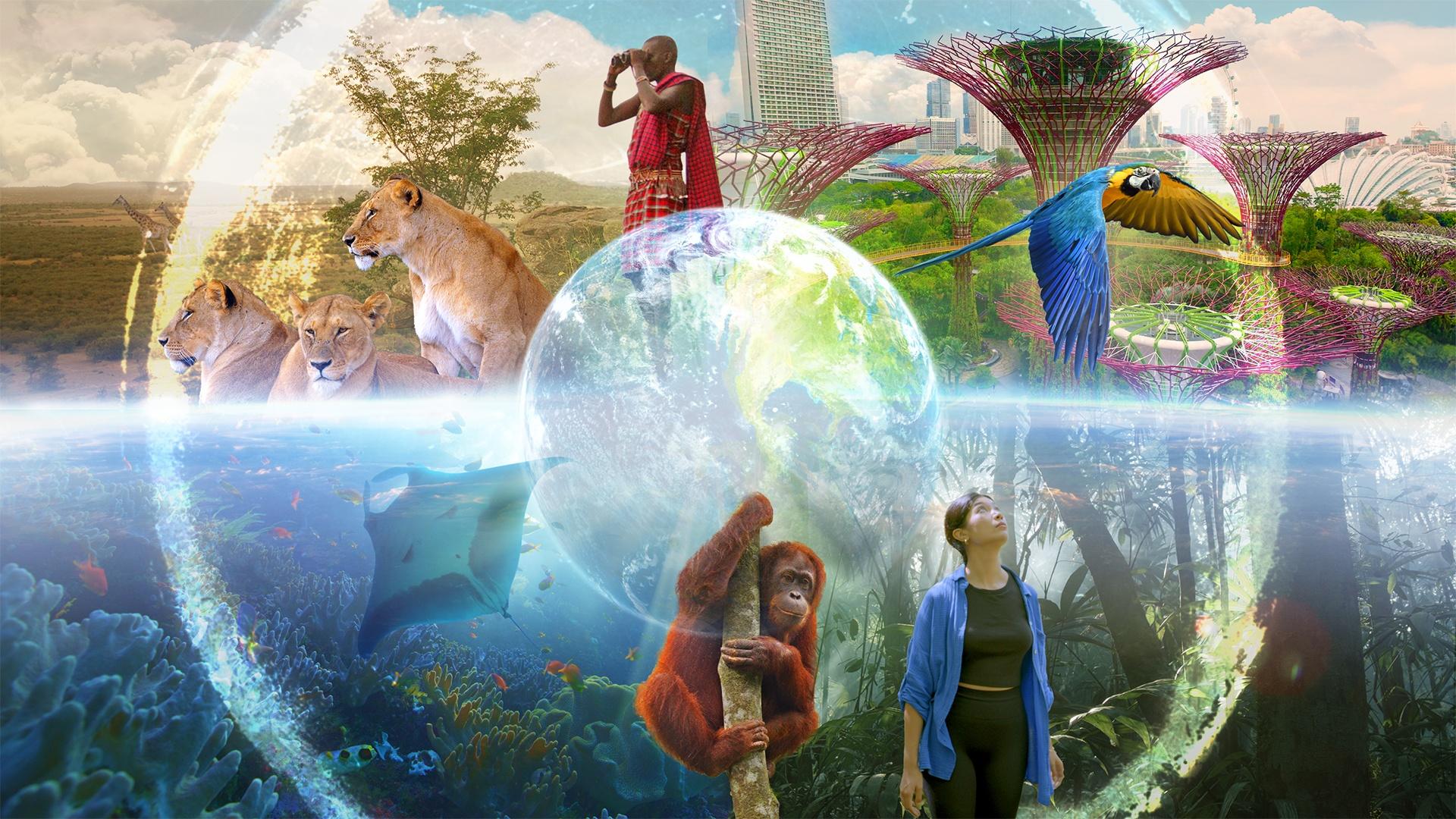
ARLINGTON, VA; March 17, 2026 – With stunning cinematography, SHARED PLANET features inspiring stories of people and wildlife flourishing together, celebrating the unique benefits of making room for nature. In an age of serious environmental challenges, this four-part global series offers a look at an alternative and more hopeful future. The series spans dozens of countries and features individuals from all walks of life interacting with nature in innovative ways. Each story explores how people and wildlife can thrive together in every ecosystem — from oceans to forests, from megacities to grasslands. Executive produced by an Emmy Award-winning team including Neil Nightingale (former creative director of BBC Earth), directed by Jeff Turner (Planet Earth, Island of the Sea Wolves), and filmed by director of photography Justin Maguire (Planet Earth, Born in China), SHARED PLANET premieres Wednesdays, April 29 – May 20, 2026, at 10:00 p.m. ET (check local listings) on PBS,PBS.organd the PBS app.
Filmed in ultra-high def 8K, SHARED PLANET captures the beauty and intricacies of the natural world, inviting audiences to immerse themselves in breathtaking landscapes and captivating wildlife action. Celebrating the benefits of coexisting with nature through spectacular visuals and unforgettable characters, the series offers a vision of a better future for both humans and wildlife.
Episode 1: “Cities” (April 29)
From Los Angeles to New York to Kolkata to Singapore, “Cities” highlights inspiring stories of people reshaping urban life and sharing space with wildlife. In Los Angeles, a mountain lion unites a community and becomes the unofficial mascot of the city, while in Kolkata, locals clean the urban wetlands, creating an incredible wildlife habitat and supporting thousands of jobs. In New York City, the Billion Oyster Project is restoring reefs to New York Harbor, helping protect the city from dangerous hurricanes. And in futuristic Singapore, urban reforestation efforts have transformed the city, enhancing citizens’ lives and attracting wildlife such as hornbills.
Episode 2: “Open Spaces” (May 6)
Filmed on four continents, “Open Spaces” shines a light on remarkable stories of people reshaping how we live and work in the planet’s grasslands, deserts, and savannahs. Maasai Lion Ambassadors in Africa show the value of living alongside lions, while in Mexico, flower-loving bats revive the tequila and mezcal industries. In Brazil’s Cerrado, farmers benefit from coexisting with wildlife like giant anteaters, and South African flowers provide water for millions in Cape Town.
Episode 3: “Forests” (May 13)
From Borneo to Guatemala, people are reshaping how we live and work in forests while still coexisting with wildlife. In Borneo, efforts are underway to plant native trees within palm oil plantations, creating wildlife corridors for orangutan families to travel in the treetops. In Guatemala, a community forestry organization sustainably harvests trees, protecting habitats like those of the highly endangered scarlet macaws. In Spain, a landowner restores his farm, overrun with invasive, flammable pines, to support wildlife like the rare Iberian lynx and secure his family’s future. In Madagascar, the local community makes a living from vanilla production and works with a researcher to protect rare lemurs and other wildlife. And in Japan — the first country to provide scientific evidence of the health benefits of forests — 100 “forest bathing” areas are being created, benefitting the mental and physical health of humans who visit them as well as the wildlife that live there.
Episode 4: “Waters” (May 20)
“Waters” highlights inspiring stories from Idaho to Indonesia, focusing on hope in the world’s oceans and freshwaters. In Alaska’s Bristol Bay, salmon are flourishing thanks to efforts to balance harvesting with protection, creating sustainable livelihoods for people and feeding hungry bears and seals every year. In Raja Ampat, dynamite fishing once threatened marine life, but it is now a Marine Protected Area with unmatched biodiversity and more jobs for local people. In Idaho, a cattle rancher collaborates with an unlikely ally — beavers — to hold water on his drought-stricken land. In Brazil’s Pantanal wetlands, ecotourism helps jaguars thrive alongside major cattle ranching operations. And in the Amazon, communities work together to conserve one of the world’s largest freshwater fish — the pirarucu — which feeds hundreds of villages.
SHARED PLANET will stream simultaneously with broadcast and be available on all station-branded PBS platforms, including PBS.org and the PBS app, which is available on iOS, Android, Roku, Apple TV, Amazon Fire TV, Android TV, Samsung Smart TV, Chromecast and VIZIO.
SHARED PLANET is produced by Shared Planet Productions Ltd. in association with Canadian Broadcasting Corporation (CBC). Executive produced by Neil Nightingale and Jeff Turner. “Cities” is produced and directed by Geordie Trifa. “Open Spaces” is produced and directed by Chelsea Turner. “Forests” is produced and directed by Louise Ferguson. “Waters” is produced and directed by Jeff Turner. The series is written by David Fowler, Chelsea Turner, and Jeff Turner. Justin Maguire is the director of photography.
About PBS
PBS, with more than 330 member stations, offers all Americans the opportunity to explore new ideas and new worlds through television and digital content. Each month, PBS reaches over 36 million adults on linear primetime television, 16 million users on PBS-owned streaming platforms, 56 million viewers on YouTube, and 10 million followers on social media, inviting them to experience the worlds of science, history, nature, and public affairs and to take front-row seats to world-class drama and performances. PBS’s broad array of programs has been consistently honored by the industry’s most coveted award competitions. As the number one educational media brand, PBS KIDS helps children 2-8 build critical skills, enabling them to find success in school and life. Delivered through member stations, PBS KIDS offers high-quality content on TV — including a PBS KIDS channel — and streaming free on pbskids.org and the PBS KIDS Video app, games on the PBS KIDS Games app, and in communities across America. Teachers of children from pre-K through 12th grade turn to PBS LearningMedia for digital content and services that help bring classroom lessons to life. More information about PBS is available at PBS.org, one of the leading dot-org websites on the internet,Facebook, Instagram, or through our apps for mobile and connected devices. Specific program information and updates for press are available at pbs.org/pressroom or by following PBS Communications on X.