
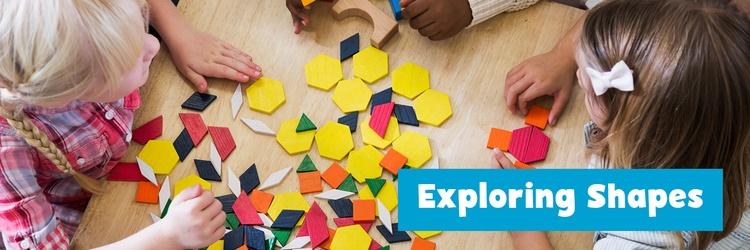
When we connect math to our everyday lives, we help children move beyond memorization and math facts toward understanding the ways math can be fun, useful, and show up in the world around us. When taking a walk, count the shapes you see around you! How many rectangles are in the window panes? How many triangles in the swing set? When finding shapes around you, compare them — are they big or small? Near or far? Or describe the shape of something you’re looking for in the grocery store and ask your child to help find it. (“The salt is in a blue and white cylinder container.”) This is called “talking math” — and it’s one of the best ways we can help kids develop a positive attitude toward math.
Learn at Home With PBS KIDS
To watch PBS KIDS shows on exploring shapes, download the PBS KIDS Video app. Looking for more activities? You can always create your own activity plan using the PBS KIDS for Parents Activity Finder and search by age and topic!
Questions to Ask Your Child
- Our homes are full of shapes! How many rectangles can you find in the kitchen? Do you think there are more circles in the bedroom or in the bathroom? Could we make lunch using some foods that are round and some foods that are square?
- Have you noticed that the tires on cars, trucks, and trains are all circles? What would happen if the tires were squares or triangles instead?
- Let’s look at a map! How could we take a walk in our neighborhood to make a circle? A triangle? A rectangle?
Play and Learn Together With Children 2 to 5
With young children, turn a game of hide-and-seek into a fun lesson about shapes by hiding paper squares, triangles, circles, and more throughout your home. Then take the game outside! On a family walk, have your child search out shapes on buildings, street signs, and in nature around your neighborhood. Then take some quiet time at home to work on scissor skills by creating a shape collage.
Learn Along Bingo for Ages 2-5: Shapes
Play and learn with this activity packet all about shapes!
Make a Shape Collage
How many shapes can you find inside and outside of your home?
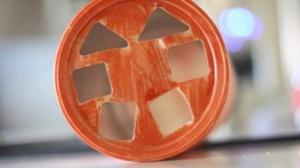
DIY Shape Sorter
Make a cute shape sorting toy with a recycled container.
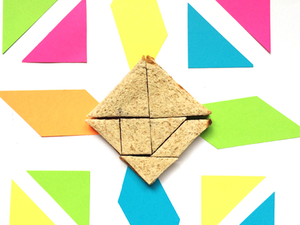
Play With Your Food! Tangram Puzzle Sandwiches
Turn lunchtime into math play for you and your child.
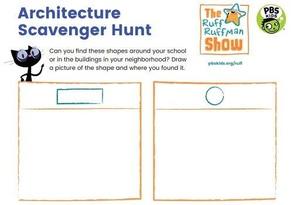
Architecture Scavenger Hunt
Can your child find these shapes around their school or neighborhood? Have them draw a picture of the shape and where they found it.
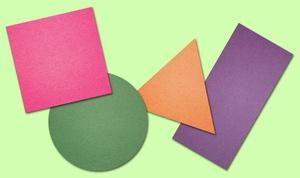
Hide and Seek With Shapes
Play a new version of hide and seek to help your child learn about shapes!
Play and Learn Together With Children 6 to 8
With older children, start to explore the difference between 2D and 3D shapes on a neighborhood scavenger hunt. Then, make 3D paper versions of the shapes you saw — like cubes or pyramids — and use those shapes to create a neighborhood geoboard map.
Learn Along Bingo for Ages 6-8: Shapes
Play and learn with this activity packet all about shapes!
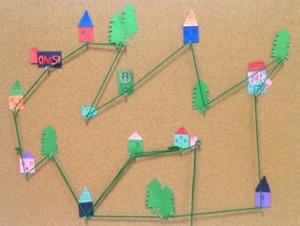
Make a Neighborhood Geoboard
Explore geometric shapes, scaling, perimeters and polygons with this homemade geoboard.
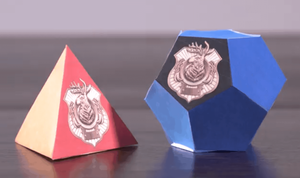
Build Paper Polyhedrons
Help solve an odd-tastic investigation by folding and gluing paper to build 3-D shapes while learning math vocabulary.
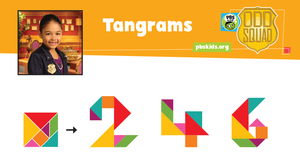
Tangrams
Cut out the tangram shapes and then try to complete the challenges.
Explore 2D and 3D Shapes with Peg
Send your child on a scavenger hunt to search for real-world objects that represent 2D and 3D shapes.
Sharpen Shape Skills With the Shape Toolkit
Your child's knowledge of shapes will help them solve 4 cases for Olive and Otto.
Play and Learn By Myself
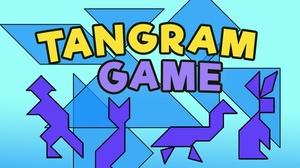
Tangram Game
Solving tangram puzzles can help your child learn about the results of rotating and putting together 2D shapes. Try making shapes with this fun online game.
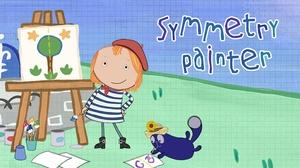
Symmetry Painter
Your child can create awesomely symmetrical artwork by using a paintbrush, stamps and stickers in this online game with Peg and Cat.
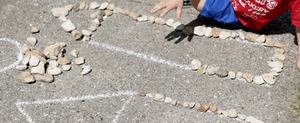
Trace Shapes With Rocks
Practice pre-writing skills, without actually doing any writing with a pen or pencil.
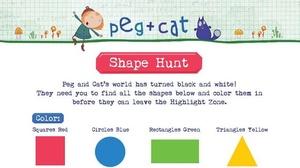
Shape Hunt
Find and color all the shapes below to help Peg and Cat leave the Highlight Zone.
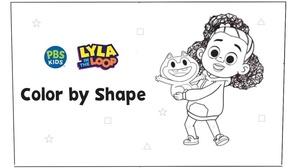
Color by Shape
Color in the picture by using the shape code. Each symbol tells you which color to use.
Read More
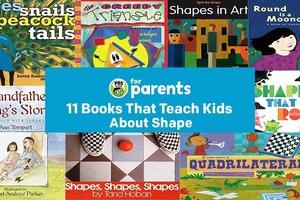
11 Books That Teach Kids About Shapes
Don't be a square! Check out some of the best books about shapes.
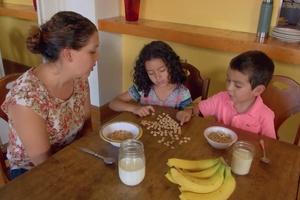
8 Easy Ideas to Add Math Into Your Daily Routine
Most children are interested in math as it exists in the world around them. Here's how parents can use that excitement in their everyday routines (and you don't need to be a math wiz!).
Why Children Still Need to Read (and Draw) Maps
While many skills have become obsolete in the digital age, map reading remains an important tool for building children’s spatial reasoning skills and helping them make sense of our world.

Bring Math to Your Next Family Sports Outing
Sports give you opportunities to use math in ways that enhance the experience. Here are four fun ideas for reinforcing important math concepts while watching your next game together.

Add These Math Activities to Your Family Routine
Building early math skills can be easily worked on at home as part of your daily routine! Here are simple activity ideas your family can do based off of six different types of math skills.
Tips for Doing Math Around Your Home
Math is all around us, whether we are playing a game outside, cooking in the kitchen, or even playing with toys at home. Here are ideas you can do with everyday objects to foster your child’s love of math.