
Paine’s Critics
Many Loyalists and some other Americans believe Thomas Paine’s ideas go too far.
From
Paine’s Critics
Clip: Special | 1m 7sVideo has Closed Captions
Many Loyalists and some other Americans believe Thomas Paine’s ideas go too far.
Many Loyalists and some other Americans believe Thomas Paine’s ideas go too far.
From
Problems playing video? | Closed Captioning Feedback
Problems playing video? | Closed Captioning Feedback
Episodes presented in 4K UHD on supported devices. Corporate funding for THE AMERICAN REVOLUTION was provided by Bank of America. Major funding was provided by The Better Angels Society and...
Paine’s Critics
Clip: Special | 1m 7sVideo has Closed Captions
Many Loyalists and some other Americans believe Thomas Paine’s ideas go too far.
From
Problems playing video? | Closed Captioning Feedback
Where to Watch The American Revolution
The American Revolution is available to stream on pbs.org and the PBS app.
Buy Now
MOMENTS: The Revolutionary War Card Game
Use your knowledge of Revolutionary-era moments to build a timeline of real historical events.Providing Support for PBS.org
Learn Moreabout PBS online sponsorship♪ Narrator: Not all minds were changed.
Hannah Griffitts, the Philadelphia poet who in 1768 had urged American women to boycott British goods, was horrified.
Kamensky: The idea that to reform the Empire by not buying tea or imported cloth would lead to this crazy question of independence was an impossible thing for her to countenance.
Paine is where a lot of people get on the revolutionary road.
It's where she gets off.
Narrator: For some Americans, "Common Sense" confirmed their worst fears.
Vermont Loyalist John Peters, who continued to receive death threats from his Patriot neighbors, had reached a breaking point.
Voice: Often mobbed and once imprisoned by the malcontents, I quitted my family, property, and offices, and fled to Canada, to avoid personal danger and to support the British cause against its enemies.
[John Peters]
Video has Closed Captions
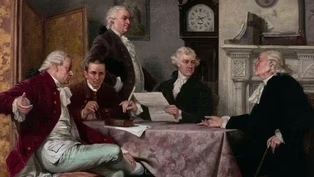
Clip: Special | 2m 58s | Richard Henry Lee proposes a formal resolution declaring independence from Britain. (2m 58s)
Video has Closed Captions
Clip: Special | 1m 24s | Jefferson uses charged language in the final grievance listed in the Declaration of Independence. (1m 24s)
Video has Closed Captions
Clip: Special | 1m 57s | Colonial leaders know that France’s support is essential, but they must sever ties with Britain. (1m 57s)
Video has Closed Captions
Clip: Special | 1m 47s | Revolutionary leaders realize they need popular support and begin to address everyday concerns. (1m 47s)
Video has Closed Captions
Clip: Special | 1m 44s | One purpose of the Declaration of Independence is to declare that George III is no longer sovereign. (1m 44s)
Video has Closed Captions
Clip: Special | 1m 17s | King George believes this American insurrection could lead to the end of the British empire. (1m 17s)
The Meaning of the Declaration to Different Groups
Video has Closed Captions
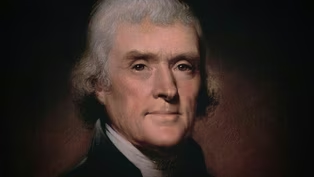
Clip: Special | 1m 28s | Different groups begin to wonder what “all men are created equal” means for them. (1m 28s)
Video has Closed Captions
Clip: Special | 1m 34s | The Preamble addresses the concept of natural rights. (1m 34s)
Video has Closed Captions
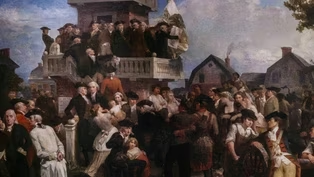
Clip: Special | 2m 40s | After ratification, the Declaration is publicly read across the former colonies. (2m 40s)
Video has Closed Captions
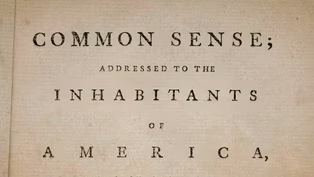
Clip: Special | 4m 11s | Thomas Paine publishes Common Sense, an explosive pamphlet that attacks monarchy. (4m 11s)
Providing Support for PBS.org
Learn Moreabout PBS online sponsorship






Support for PBS provided by:
Episodes presented in 4K UHD on supported devices. Corporate funding for THE AMERICAN REVOLUTION was provided by Bank of America. Major funding was provided by The Better Angels Society and...