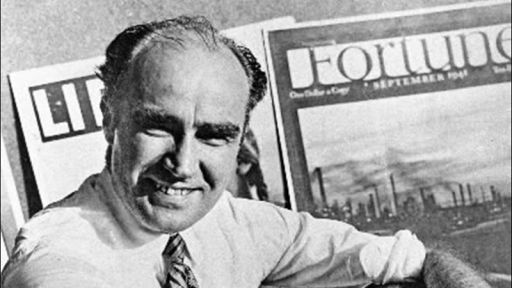
Luce and his partner had raised eighty-six thousand dollars to start their first magazine, Time, in 1923. In 1941, the revenues from Time, and other Luce enterprises reached forty-five million.
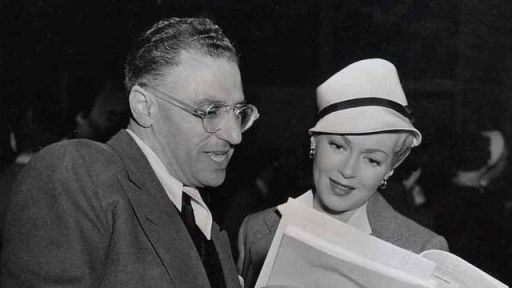
Cukor was an American film director. He mainly concentrated on comedies and literary adaptations. His career flourished at RKO when David O. Selznick, the studio's Head of Production, assigned Cukor to direct several of RKO's major films, including What Price Hollywood? (1932), A Bill of Divorcement (1932), Our Betters (1933), and Little Women (1933)
Fitzgerald was an American fiction writer, whose works helped to illustrate the flamboyance and excess of the Jazz Age. While he achieved popular success, fame, and fortune in his lifetime, he did not receive much critical acclaim until after his death. Fitzgerald is now widely regarded as one of the greatest American writers of the 20th century.
“The Hardest-Working Man in Show Business,” “Soul Brother Number One,” “the Godfather of Soul,” — in whatever guise, James Brown is unquestionably one of the most charismatic musical icons of the 20th century. An irrepressible performer, ruthless but highly proficient bandleader, awesome dancer, and, unquestionably, the man who flipped soul music on its head.
By the time of his death on April 30, 1983, George Balanchine had created over 400 works and was recognized as a 20th-century master alongside Picasso and Stravinsky. Here is the story of how the man born Georg Melitonovitch Balanchivadze in St. Petersburg, Russia in 1904 went on to become the artistic director and primary choreographer of the New York City Ballet.
In 1931, 3 young idealists, Harold Clurman, Cheryl Crawford and Lee Strasberg, were inspired by a passionate dream of transforming the American theater. They recruited 28 actors to form a permanent ensemble dedicated to dramatizing the life of their times. They conceived The Group Theatre as a response to what they saw as the old-fashioned light entertainment that dominated their contemporaries.
John Ford and John Wayne — a friendship and professional collaboration that spanned 50 years, changed each others’ lives, changed the movies, and in the process, changed the way America saw itself. It was a relationship that reflected all the elements and all the paradoxes of 20th century America — generosity of spirit, abuse of power, a sense of loyalty, and a restless nationalism.
Charlie Chaplin, Buster Keaton, or Clara Bow, were stars who created trademark personas and spent their entire careers testing the limits of those characters. For many in the industry, both then and now, this type of career is considered the pinnacle of success, but for one actor it was the antithesis of the his art. For Lon Chaney, the art of acting was the art of continual transformation.
One of the early “scat” performers, Fitzgerald found a place among the growing jazz innovators, making recordings with such greats as Billie Holiday, Duke Ellington, and Louis Armstrong. Through fifty-eight years of performing, thirteen Grammys and more than forty million records sold, she elevated swing, bebop, and ballads to their highest potential. She was, undeniably, the First Lady of Song.
For the past fifty years, the Old Labor Stage on 44th street in New York City has been home to some of the most inventive acting, directing, and playwrighting in the country. Its members have included such greats as Marlon Brando, Robert de Niro, Norman Mailer, Eli Wallach, Sidney Poitier, Edward Albee, Marilyn Monroe, and James Dean.
Known for his extended study of Washington Square Park and his distorted nudes of the 1930s, Andre Kertesz was a quiet but important influence on the coming of age of photojournalism and the art of photography. For more than seventy years, his subtle and penetrating vision helped to define a medium in its infancy.
Buster Keaton is considered one of the greatest comic actors of all time. His influence on physical comedy is rivaled only by Charlie Chaplin. Like many of the great actors of the silent era, Keaton’s work was cast into near obscurity for many years. Only toward the end of his life was there a renewed interest in his films.
Considered the greatest Mexican painter of the twentieth century, Diego Rivera had a profound effect on the international art world. Among his many contributions, Rivera is credited with the reintroduction of fresco painting into modern art and architecture. His radical political views and tempestuous romance with the painter Frieda Kahlo were then, and remain today, a source of public intrigue.
From the late 1930s to the early 1960s, Billy Wilder dominated Hollywood’s Golden Age. With over fifty films and six Academy Awards to his credit, he is one of Hollywood’s all-time greatest directors, producers and screenwriters.
Throughout the United States there are thousands of parks in which can be found bronze and marble statues of the major historical figures of times past. Among the greatest American sculptors and monument builders of the late nineteenth and early twentieth centuries was Augustus Saint-Gaudens.