
Should Data Centers Be Built in Imperial Valley?
Clip | 8m 26sVideo has Closed Captions
Should California’s largest data center be built in one of its poorest places?
A developer wants to build California’s largest data center in one of the state’s poorest places. What could go right or wrong?
Problems playing video? | Closed Captioning Feedback
Problems playing video? | Closed Captioning Feedback
Earth Focus is a local public television program presented by PBS SoCal
Should Data Centers Be Built in Imperial Valley?
Clip | 8m 26sVideo has Closed Captions
A developer wants to build California’s largest data center in one of the state’s poorest places. What could go right or wrong?
Problems playing video? | Closed Captioning Feedback
Where to Watch Earth Focus
Earth Focus is available to stream on pbs.org and the PBS app.
Providing Support for PBS.org
Learn Moreabout PBS online sponsorship[background music] -Imperial County is a little isolated in the state of California.
We are in the southeast corner.
We are along the Mexican border to the south and the Arizona border to the east.
We are an agricultural cen.. one of the most productive agricultural centers on Earth.
Economically, we're a very depressed economy in Imperial County.
Many families down here are below the poverty line.
Average incomes for families down here are often far below the state averages in California and far below national averages.
We have a tremendously high unemployment rate.
-What I'm trying to build in Imperial County is a data center.
A data center is a building that basically does all the computing that goes on with these chips into very big racks.
The projected cost of the building with all the chips when it's done is about $10 billion.
-Things are bad right now.
The farming deal here in Imperial Valley is the worst it's ever been.
-When you hear about something like that coming in, you think, "Oh, that could be something for us."
-No, definitely, it'll make a whole bunch of jobs, which we need.
-There is absolutely nothing wrong with anybody coming in and saying, "I have an opportunity to offer your community.
Here are jobs.
Here is a plant, a fixture that could be established in your community and help grow your community economically, help support your families," but we need it to respect the limitations our community faces, and we need it to be transparent.
There's a reason why we expect developers who are wanting to bring in a large-scale project and place it near homes to go through a full environmental quality analysis, because that gives the people in that neighborhood, in that community, protection from pollution, from noise, from light, overuse of water, impact on electrical bills, on so many things.
What we as a community have asked is that our supervisors hold that developer back just a little and say, "Complete this environmental survey, and show our community that this can be done safely and without having a negative impact on their lives."
-It's a building with no windows.
I don't know how it scares you.
It doesn't suck up people.
It's a building with no windows.
-I don't think it's beneficial, and not only that, is it even sustainable?
We just had historic water cuts for the Colorado River, and now you're saying that we're suitable to sustain a water-intensive industry.
It just doesn't make sense to me to build these things in the desert with a limited water supply.
-To the people objecting, what's your solution?
Are you there just to blow things up?
What's your alternative?
What are you bringing to the table?
A Starbucks?
What are you bringing to the table?
-The alternative would be, don't build it.
We'll look for something else that we feel could create new taxes, jobs, opportunities, whatever that something else is.
-This is land.
It's private land, purchased privately.
It has private zoning.
It complies within the zoning code.
It complies with all the environmental requirements as the air permits.
It can get the electricity and pay for it, and then some.
It could buy the water or buy it reclaimed, so you don't want it.
Since when does just the public get to say no to a private ri.. -I think he's misrepresenting the reality here.
I think if you fought long and hard, spent some money trying to claim he was exempt from California's Environmental Quality Act, clearly there's a recent court case that there was a tentative decision.
That decision was then finalized, which made it pretty clear that that's not at all the case, that such a project is subject to environmental review for all the reasons why we have that review in the first place, which is to protect vulnerable communities like Imperial County.
-This data center proposal wants to access over 200,000 gallons of water, to bring it into that center and use that to cool their operations.
When you're doing that, you're pulling water out of our available marketplace, which means you're threatening the water going to farms, you're threatening the water going to homes, you're threatening the water going to other businesses.
If the federal government continues to have to reduce the amount of water we have available, but we have a contractual agreement to a plant like this, what do we do as a community?
What business do we close?
What field do we fallow in order to provide water there?
That is not an answer, because every time you fallow a field, you have workers who work on t.. That's hurting their family livelihood.
-The county did a study.
That study shows you that the economic benefit to that area in 30 years is $2.95 billion.
That's $100 million per year.
-In what?
In jobs?
In tax?
-In total benefits.
In total benefits.
Tax-wise alone, the building, which will be $10 bi.. probably returns about $20 million a year, and then the chips will return another $10 million, so it's about $30 million a year.
When you put that in perspective, there's nothing even close.
Remember, you're talking about 75 acres that's going to return $30 million a year or $100 million for the whole area.
The value is enormous to the area.
Job-wise, it brings in about 1,688 during the two-year construction period.
-I guess your argument is nobody is knocking at Imperial County's door with this kind of an offer that can do these things for Imperial County.
-Yes, that would be really accurate.
It's not even close.
-I have been here long enough to hear the exact same arguments that he's making to the county.
Go back in time about 15 years ago when solar indus.. to the valley, and they told us the exact same thing, "Hey, you guys have such bad economic state, such high levels of poverty, unemployment."
All of it is true.
We got so many solar projects that if you put al.. currently operating solar acres together, it is one of the biggest in the world.
Yet, every couple years, our electricity bills go up.
They're extracting things from us, for sure, but what are we getting in return?
-This is beyond my scope, but in a big picture, what the AI boom is going to do is going to increase our productivity in a way that we've never seen it worldwide.
The AI is going to get to, eventually, AGI, which is basically where the computers are really, really super smart.
Now, what'll happen to the world's economy is the productivity's going to immensely increase to a level we've never seen before.
There'll be massive amounts of wealth.
There'll certainly be unemployment.
There'll be a lot of things that'll shift, but it's coming, and you can't stop it.
There's no guarantee that California has to be part of this party.
It could easily say no, but it's kind of crazy, though, isn't it?
We create the computers, we create the AI, but yet, for the infrastructure, send it elsewhere.
Why?
-What is data centers for, and who does it be.. That's another question that's up in the air, because if it's really being used for the betterment of society, then why are we seeing so many industries concerned about this?
Even the industry leaders themselves have come out and said, "We might want to slow this thing down because we don't really actually fully understand what we're building here."
-We can walk and chew gum.
We can have good tech that's safe, and we can have facilities that support tech that are also appropriate for our communities and are done right.
I think because of the scale of California, oftentimes when California acts, so goes the nation.
We have an opportunity and an obligation to model how this can be done in a way that's appropriate.
-The data center will get built in.. It might have to shift, pivot, whatever.
My task is wake up every day and advance it.
It'll get built.
-Americans are realizing that we don't have to just sit back and listen to what people with money tell us, that we have a right to voice our concerns.
We have a right to demand information that is pertinent to us and our families, and we need to slow this down.
We need to regulate this better to make these things operate with less of an impact in our communities.
 Now Playing
Should Data Centers Be Built in Imperial Valley?
Video has Closed Captions
Clip | 8m 26s | Should California’s largest data center be built in one of its poorest places? (8m 26s)

How to Turn Toilet Water into Drinking Water
Video has Closed Captions
Clip | 8m 34s | Efforts are growing to turn more Southern California sewage water to drinking water with recycling. (8m 34s)
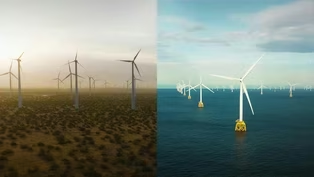
Why California is Betting on Giant Floating Wind Turbines
Video has Closed Captions
Clip | 8m 10s | California looks to wind energy, on land and offshore, to power its clean energy future. (8m 10s)
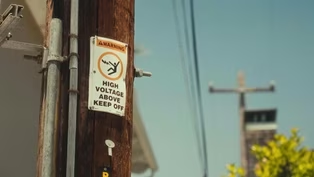
Why Power Lines Are Going Underground
Video has Closed Captions
Clip | 5m 52s | Could underground power lines help reduce wildfire risks in California? (5m 52s)
Why Fast Fashion Is Fueling a Growing Waste Crisis
Video has Closed Captions
Clip | 3m 48s | More clothes, lower quality and mounting environmental costs. (3m 48s)
The ‘Impossible Dream’ to Restore the LA River
Video has Closed Captions
Clip | 3m 14s | Exploring the history, ecology, and future of the Los Angeles River. (3m 14s)
The Fight to Protect Los Padres National Forest
Video has Closed Captions
Clip | 7m 46s | Will the Trump Administration’s rollback of public lands protections jeopardize Los Padres National (7m 46s)
The Fight to Protect the Mojave
Video has Closed Captions
Clip | 7m 58s | The researchers dedicated to protecting the Mojave Desert’s biodiversity. (7m 58s)
Conservationists and Communities Fight to Protect the Kern River
Video has Closed Captions
Clip | 8m 27s | The California River that’s loved, drained and overrun and the people fighting to defend it (8m 27s)
Preserving Ocean Life on the California Coast
Video has Closed Captions
Clip | 7m 13s | Setting sail to learn about efforts to protect marine ecosystems in the Santa Barbara Channel. (7m 13s)
Beach Access and a Threatened Track
Video has Closed Captions
Clip | 7m 13s | As the coastline erodes, what can be done to save the seaside rail link between LA and San Diego? (7m 13s)
A Visit to Carlsbad's Fix-It Clinic
Video has Closed Captions
Clip | 6m 47s | The people who find joy and purpose in repairing the broken items in our lives. (6m 47s)
Sun, Sand and Climate Change: The Fight to Save California’s Coast
Video has Closed Captions
Clip | 6m 53s | What’s being done to save Southern California’s beaches from being washed away for good? (6m 53s)
How to Create a Sustainable, Zero Waste Meal Plan
Clip | 7m 11s | A climate change activist tells us how to create a more sustainable kitchen. (7m 11s)
The Community That Transforms Food Scraps Together, Stays Together
Video has Closed Captions
Clip | 5m 50s | L.A.’s garden activists create a composting movement. (5m 50s)
Meet the People Rescuing Food, Feeding Neighbors & Helping the Climate
Video has Closed Captions
Clip | 6m 32s | Saving perfectly good food from dumpsters (6m 32s)
Video has Closed Captions
Clip | 6m 27s | We explore why enough water couldn’t be pumped through fire hydrants to protect homes from burning. (6m 27s)
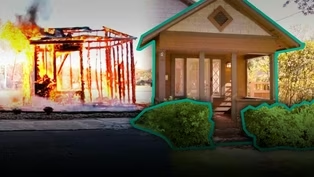
Goodbye Plants, Hello Fire Safety
Video has Closed Captions
Clip | 7m 53s | Controversial proposal to protect homes from wildfires by forcing homeowners to remove vegetation. (7m 53s)
Can You Build a Fire-Proof Home?
Video has Closed Captions
Clip | 7m 46s | How to rebuild after L.A.’s devastating wildfires. (7m 46s)
Earth Focus Environmental Film Festival 2023 (Preview)
Preview | 30s | The fifth annual Earth Focus Environmental Film Festival features five days of screenings. (30s)
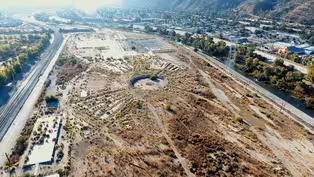
Clip | 8m 17s | Taylor Yard is now an undeveloped and still-contaminated site adjacent to the L.A. River. (8m 17s)
Earth Focus Environmental Film Festival
Preview | 1m 18s | Earth Focus Environmental Film Festival (1m 18s)
Cold Rush? The Changing Arctic
Clip | 14m 41s | "Earth Focus" looks at the changing face of the Arctic today. (14m 41s)
Fukushima: Can it Happen in the US?
Clip | 7m 21s | Fukushima was not a Japanese nuclear disaster. (7m 21s)
Cambodia: Fight for Areng Valley
Clip | 10m 47s | The Chong people are fighting to protect their forests. (10m 47s)
Inside Illicit Ivory and Rhino Horn Trade
Clip | 6m 41s | Inside Illicit Ivory and Rhino Horn Trade (6m 41s)
Unacceptable Risk: Firefighters on the Frontline
Clip | 12m 52s | Fires are becoming more frequent, larger and more devastating than ever. (12m 52s)
China: Religion and Environment
Clip | 13m 37s | Filmmakers Gary Marcuse and Shi Lihong capture a surprising trend in China. (13m 37s)
Hope for Rhinos? New Approaches to Save Endangered Species
Clip | 14m 31s | Rhino horn is more expensive than gold or platinum. (14m 31s)
Making Coastal Communities More Resilient to Extreme Weather
Clip | 5m 48s | Joshua Saks looks at how America's communities can be protected. (5m 48s)
Paying for Climate Change: A Reinsurance Industry View
Clip | 6m 32s | Climate change is anticipated to have a big impact on the insurance industries. (6m 32s)
Encroaching Tides: What's at Stake for the US
Clip | 6m 32s | The eastern coast of the United States has one of the highest rates of sea level rise. (6m 32s)
Sacred Economics: A Post Money World?
Clip | 11m 55s | Charles Eisenstein speaks to Earth Focus about his new book Sacred Economics. (11m 55s)

Neonics: Toxic Until Fully Tested
Clip | 8m 58s | Scott Hoffman Black speaks about the impact of neonicotinoid pesticides. (8m 58s)

Neonics: Driving Declines in Biodiversity
Clip | 8m 26s | Dr. David Goulson speaks about the impact of neonicotinoid pesticides. (8m 26s)
Clip | 5m 43s | Earl Blumenauer talks about why protecting pollinators in the US is the national interest. (5m 43s)
Clip | 11m 29s | Shrimp farmers tell us to reject contaminated shrimp from Bangladesh. (11m 29s)

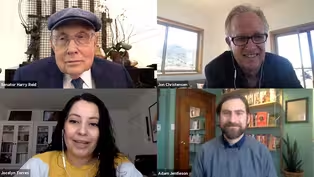
Killing the Senate Filibuster Could Inspire Bipartisanship
Clip: Special | 27m 36s | Jon Christensen moderates a conversation with former Nevada Sen. Harry Reid. (27m 36s)
Sen. Cortez Masto: Pursuing a Green Economy
Video has Closed Captions
Clip: Special | 1m 9s | Cortez Masto has a goal to grow a clean energy economy that includes jobs for the future. (1m 9s)
Sen. Cortez Masto: Protecting the Outdoors is Nonpartisan
Video has Closed Captions
Clip: Special | 37s | Protecting the environment should not be considered a partisan issue, Cortez Masto says. (37s)
Sen. Cortez Masto: On Reid’s Environmental Legacy
Video has Closed Captions
Clip: Special | 54s | Sen. Harry Reid struck a balance when crafting inclusive environmental policy, she says. (54s)
Sen. Cortez Masto: On Growing Up in Rural Las Vegas
Video has Closed Captions
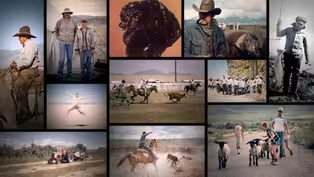
Clip: Special | 40s | Cortez Masto grew up in a rural Las Vegas with cowboys and ranches. (40s)
Sen. Cortez Masto: ‘A Microcosm of America’
Video has Closed Captions
Clip: Special | 1m 17s | Sen. Catherine Cortez Masto describes her state’s role in national politics. (1m 17s)
The New West and the Politics of the Environment (Preview)
Video has Closed Captions
Preview: Special | 1m | A quiet, little-known revolution is taking place in American environmental politics. (1m)
Moapa Solar Plant Addressed Injustice, Economy and Energy
Video has Closed Captions
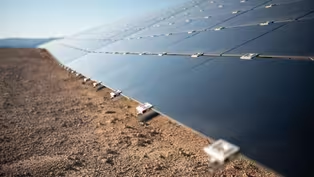
Clip: Special | 5m 7s | Behind-the-scenes negotiations helped establish the Moapa transition from coal to solar. (5m 7s)
How SNPLMA Wove Urban Las Vegas Back Into the Environment
Video has Closed Captions
Clip: Special | 2m 17s | The legislation helped balance urban growth in Las Vegas with environmental conservation. (2m 17s)
Black Rock-High Rock: The Negotiation Behind Conservation
Video has Closed Captions
Clip: Special | 8m 2s | A proposal to protect Nevada’s Black Rock Desert-High Rock Canyon received much criticism. (8m 2s)
Providing Support for PBS.org
Learn Moreabout PBS online sponsorship New Episode
- Drama

Hugh Bonneville stars in a crime drama inspired by one of the largest robberies in British history.
 New Episode
- Drama

Benjamin Wainwright stars as Maigret in the contemporary adaptation of Georges Simenon's novels.



 New Episode


 New Episode



 New Episode
Support for PBS provided by:
Earth Focus is a local public television program presented by PBS SoCal