
How to Turn Toilet Water into Drinking Water
Clip | 8m 34sVideo has Closed Captions
Efforts are growing to turn more Southern California sewage water to drinking water with recycling.
With more of Southern California’s traditional water supplies drying up because of climate change, officials are increasingly turning to a once taboo solution: turning sewage water into drinking water. But will the public fill their glasses?
Problems playing video? | Closed Captioning Feedback
Problems playing video? | Closed Captioning Feedback
Earth Focus is a local public television program presented by PBS SoCal
How to Turn Toilet Water into Drinking Water
Clip | 8m 34sVideo has Closed Captions
With more of Southern California’s traditional water supplies drying up because of climate change, officials are increasingly turning to a once taboo solution: turning sewage water into drinking water. But will the public fill their glasses?
Problems playing video? | Closed Captioning Feedback
Where to Watch Earth Focus
Earth Focus is available to stream on pbs.org and the PBS app.
Providing Support for PBS.org
Learn Moreabout PBS online sponsorshipWe're doing a story about water.
What do you know about water?
What do I know?
It's hydrogen and oxygen.
I know that.
I don't know where it comes from.
You don't know where your water comes from?
Household water, I don't know where it comes from.
I don't know, but I do know it comes from many different places in the US or maybe even Canada, I don't know.
Here in Los Angeles, we're only this large thriving metropolis because of imported water.
Whether it's from the LA Aqueduct, which gets its water from the Eastern Sierras, or the Colorado River Aqueduct, or the California Aqueduct, which gets its water from the Sacramento Bay Delta, that's where depending on whether you're looking at the city of LA or LA County, we get between 60% and 80% of our water there.
It's really imperiled us now as climate has changed and that water is increasingly unreliable.
We can't rely on these rivers that are hundreds of miles away and fed by dwindling snowpack to reliably provide water for the tens of millions of people that live here in Southern California.
There's a lot we can do to develop local water supplies.
Beyond conservation, we have to maximize the water that we already have.
That means using it more than once.
It means recycling it, restoring our polluted groundwater aquifers, and capturing the water that we do get.
Wastewater recycling has been proven.
Orange County has been doing it for two decades.
We're here in Fountain Valley, California at a facility called the Groundwater Replenishment System.
This is a project where we can take treated wastewater, put it through some advanced treatment processes, and produce a water that's beyond drinking water quality, all with the goal of replenishing our local groundwater aquifer in Orange County that's the main source of drinking water for two and a half million people.
These are called our digesters.
Our digesters are like your stomach.
This is where we then collect all of our biosolids from.
Biosolids is like the organic nutrients that we get from the digesters.
Is that another word for poop?
Yes.
Okay.
Yes.
[laughs] What would have happened to a lot of this wastewater in the past?
It would have just gone straight to the ocean.
Now, how much wastewater in Orange County is reclaimed?
100%.
100%?
In our service area, yes.
This is one of our open primary clarifiers.
After the waters come in, the digesters have done their thing, they've removed all of the solids from the water, this is now the first part of our treatment process.
You can see there's a weir, is what we call it.
It moves very slowly, but what it's doing is it's basically wiping off the top layer of scum.
This is water you still wouldn't want to drink.
This is not water you want to drink.
Correct.
As you can see, it's definitely a lot clearer than when it first came into our sewer system.
We tell people a lot of times, imagine being at Angel Stadium.
We can fill that from bottom to top two and a half times within a 24-hour period.
That's the amount of water that we are treating and collecting every day.
[music] The main thing that we're doing here at our groundwater replenishment system is we're putting the water through three advanced treatment processes.
We're putting it first through what we call microfiltration or ultrafiltration.
Basically, it's a man-made filter that filters down to a really small size to remove bacteria and the larger particles that might still be left after the wastewater treatment at the wastewater treatment plant.
Then we put it through reverse osmosis, which is what you see behind me now.
That's the workhorse of the process.
We're putting the water through such a fine level of filtration, we're removing the salts, all the dissolved organics, all these emerging contaminants that people are worried about.
The water is essentially distilled quality after this step.
We also have a third step after this, what we call ultraviolet light with hydrogen peroxide or advanced oxidation.
The water is so pure after the three-step process that we actually have to add minerals back in because the water is almost corrosive.
It's too clean.
It's too pure.
It really is a change in mindset.
I think at one time, the water coming out of sewage treatment plants was a waste that we should get rid of as soon as possible.
Now it's being viewed as a resource and we no longer really think of it as waste anymore.
Orange County, if they wanted to grow, they needed a reliable water supply.
I don't think industry or real estate developers would have invested in Orange County if the water district wasn't able to show that there was a plan to meet the water needs of their growing population.
It was mainly pragmatism, not some political viewpoint or sustainability mantra that drove them.
It was the fact that without that water supply and the certainty, there wouldn't be the Orange County that we have today.
When we built the original project, we had expansion in mind.
We oversized all the pipes, so now they're fully filled out because we're taking all the flow we can take.
I think the fact that we're getting so much interest from other public agencies in Southern California is an indication that technology like this or using advanced free and recycled water is a must-have.
It's not something that people look at as a last alternative, it's something that we all have to do.
The key for Pure Water LA is to stop wasting water and save it so that we can use it again.
LA right now uses about 426 million gallons a day of clean drinking water.
Now we use a lot of that for irrigation and it runs off into the ocean.
Pure Water LA is hopefully going to result in 275 million gallons a day, so more than half of our total usage being recycled and either stored in local groundwater or reused.
If the water people came to you and said, here's your water to drink.
It was once contaminated water, but we recycled it, we're giving it back to you, and it's good enough to drink, would you be cool with that?
No.
[laughs] No?
No.
I have no problem with using the wastewater.
I'm a golfer, I'm a municipal golfer, and some golf courses that are lucky enough to be able to use recycled water, I think that's a great use for it.
Drinking?
It doesn't sound very appetizing now, does it?
Why don't let me and the dogs just go over to the toilet and lap some up when we're thirsty?
When we started this project, our biggest hurdle was public perception.
What were people afraid of?
People were afraid that the water wouldn't be as safe as some of the other sources, and how could we guarantee that this water is as good as other sources of water?
We actually had to educate people on why are we even doing recycled water.
I think they trusted technology because we've done a good job of showing that it's safe.
That's why you're seeing so many projects out there being proposed.
I'm a little worried about the timeline.
Garcetti committed LA to recycling 100% of its wastewater by 2035.
If we're not going to even have an environmental impact report out for the public to review until sometime in 2027, I don't see how that timeline is possible.
That's what I see our role as LA Waterkeeper is, continuing to be that accountability partner with the city to ensure that they're doing what is necessary, to be ambitious, make sure that we're going to be able to deliver, maybe not on time, but to be able to deliver more local, reliable water for Angelenos.
There's a lot of reasons why a project like this takes a long time.
What are they?
There's stakeholders you have to engage.
There are permits that have to be obtained and environmental clearances that have to be obtained.
We absolutely respect the environmental laws and do that properly.
Our job here is to have consistent direction so we can expedite it as much as possible.
I think one of the things that we want to really get out there is, whether you believe in climate change or not, we're seeing a change in our normal water supply patterns.
If you don't adapt, you're going to get left behind.
Projects like this is one way to deal with water scarcity issues.
Potable reuse is the next frontier of finding new sources of water.
 New
Should Data Centers Be Built in Imperial Valley?
Video has Closed Captions
Clip | 8m 26s | Should California’s largest data center be built in one of its poorest places? (8m 26s)
 Now Playing
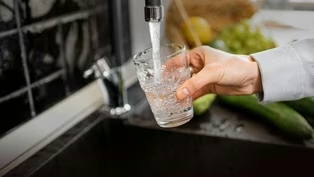
How to Turn Toilet Water into Drinking Water
Video has Closed Captions
Clip | 8m 34s | Efforts are growing to turn more Southern California sewage water to drinking water with recycling. (8m 34s)
Why California is Betting on Giant Floating Wind Turbines
Video has Closed Captions
Clip | 8m 10s | California looks to wind energy, on land and offshore, to power its clean energy future. (8m 10s)
Why Power Lines Are Going Underground
Video has Closed Captions
Clip | 5m 52s | Could underground power lines help reduce wildfire risks in California? (5m 52s)
Why Fast Fashion Is Fueling a Growing Waste Crisis
Video has Closed Captions
Clip | 3m 48s | More clothes, lower quality and mounting environmental costs. (3m 48s)
The ‘Impossible Dream’ to Restore the LA River
Video has Closed Captions
Clip | 3m 14s | Exploring the history, ecology, and future of the Los Angeles River. (3m 14s)
The Fight to Protect Los Padres National Forest
Video has Closed Captions
Clip | 7m 46s | Will the Trump Administration’s rollback of public lands protections jeopardize Los Padres National (7m 46s)
The Fight to Protect the Mojave
Video has Closed Captions
Clip | 7m 58s | The researchers dedicated to protecting the Mojave Desert’s biodiversity. (7m 58s)
Conservationists and Communities Fight to Protect the Kern River
Video has Closed Captions
Clip | 8m 27s | The California River that’s loved, drained and overrun and the people fighting to defend it (8m 27s)
Preserving Ocean Life on the California Coast
Video has Closed Captions
Clip | 7m 13s | Setting sail to learn about efforts to protect marine ecosystems in the Santa Barbara Channel. (7m 13s)
Beach Access and a Threatened Track
Video has Closed Captions
Clip | 7m 13s | As the coastline erodes, what can be done to save the seaside rail link between LA and San Diego? (7m 13s)
A Visit to Carlsbad's Fix-It Clinic
Video has Closed Captions
Clip | 6m 47s | The people who find joy and purpose in repairing the broken items in our lives. (6m 47s)
Sun, Sand and Climate Change: The Fight to Save California’s Coast
Video has Closed Captions
Clip | 6m 53s | What’s being done to save Southern California’s beaches from being washed away for good? (6m 53s)
How to Create a Sustainable, Zero Waste Meal Plan
Clip | 7m 11s | A climate change activist tells us how to create a more sustainable kitchen. (7m 11s)
The Community That Transforms Food Scraps Together, Stays Together
Video has Closed Captions
Clip | 5m 50s | L.A.’s garden activists create a composting movement. (5m 50s)
Meet the People Rescuing Food, Feeding Neighbors & Helping the Climate
Video has Closed Captions
Clip | 6m 32s | Saving perfectly good food from dumpsters (6m 32s)

Video has Closed Captions
Clip | 6m 27s | We explore why enough water couldn’t be pumped through fire hydrants to protect homes from burning. (6m 27s)
Goodbye Plants, Hello Fire Safety
Video has Closed Captions
Clip | 7m 53s | Controversial proposal to protect homes from wildfires by forcing homeowners to remove vegetation. (7m 53s)
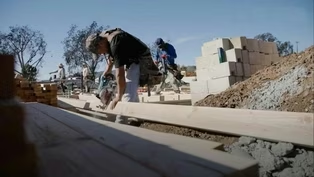
Can You Build a Fire-Proof Home?
Video has Closed Captions
Clip | 7m 46s | How to rebuild after L.A.’s devastating wildfires. (7m 46s)
Earth Focus Environmental Film Festival 2023 (Preview)
Preview | 30s | The fifth annual Earth Focus Environmental Film Festival features five days of screenings. (30s)
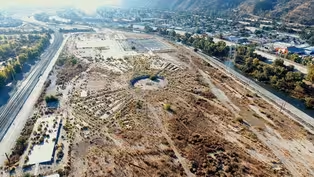
Clip | 8m 17s | Taylor Yard is now an undeveloped and still-contaminated site adjacent to the L.A. River. (8m 17s)
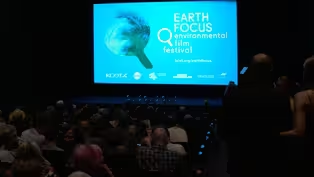
Earth Focus Environmental Film Festival
Preview | 1m 18s | Earth Focus Environmental Film Festival (1m 18s)
Cold Rush? The Changing Arctic
Clip | 14m 41s | "Earth Focus" looks at the changing face of the Arctic today. (14m 41s)
Fukushima: Can it Happen in the US?
Clip | 7m 21s | Fukushima was not a Japanese nuclear disaster. (7m 21s)
Cambodia: Fight for Areng Valley
Clip | 10m 47s | The Chong people are fighting to protect their forests. (10m 47s)
Inside Illicit Ivory and Rhino Horn Trade
Clip | 6m 41s | Inside Illicit Ivory and Rhino Horn Trade (6m 41s)
Unacceptable Risk: Firefighters on the Frontline
Clip | 12m 52s | Fires are becoming more frequent, larger and more devastating than ever. (12m 52s)
China: Religion and Environment
Clip | 13m 37s | Filmmakers Gary Marcuse and Shi Lihong capture a surprising trend in China. (13m 37s)
Hope for Rhinos? New Approaches to Save Endangered Species
Clip | 14m 31s | Rhino horn is more expensive than gold or platinum. (14m 31s)
Making Coastal Communities More Resilient to Extreme Weather
Clip | 5m 48s | Joshua Saks looks at how America's communities can be protected. (5m 48s)
Paying for Climate Change: A Reinsurance Industry View
Clip | 6m 32s | Climate change is anticipated to have a big impact on the insurance industries. (6m 32s)
Encroaching Tides: What's at Stake for the US
Clip | 6m 32s | The eastern coast of the United States has one of the highest rates of sea level rise. (6m 32s)
Sacred Economics: A Post Money World?
Clip | 11m 55s | Charles Eisenstein speaks to Earth Focus about his new book Sacred Economics. (11m 55s)
Neonics: Toxic Until Fully Tested
Clip | 8m 58s | Scott Hoffman Black speaks about the impact of neonicotinoid pesticides. (8m 58s)

Neonics: Driving Declines in Biodiversity
Clip | 8m 26s | Dr. David Goulson speaks about the impact of neonicotinoid pesticides. (8m 26s)
Clip | 5m 43s | Earl Blumenauer talks about why protecting pollinators in the US is the national interest. (5m 43s)
Clip | 11m 29s | Shrimp farmers tell us to reject contaminated shrimp from Bangladesh. (11m 29s)

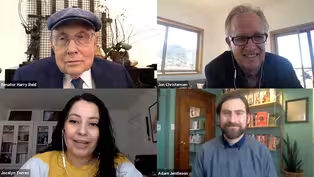
Killing the Senate Filibuster Could Inspire Bipartisanship
Clip: Special | 27m 36s | Jon Christensen moderates a conversation with former Nevada Sen. Harry Reid. (27m 36s)
Sen. Cortez Masto: Pursuing a Green Economy
Video has Closed Captions
Clip: Special | 1m 9s | Cortez Masto has a goal to grow a clean energy economy that includes jobs for the future. (1m 9s)

Sen. Cortez Masto: Protecting the Outdoors is Nonpartisan
Video has Closed Captions
Clip: Special | 37s | Protecting the environment should not be considered a partisan issue, Cortez Masto says. (37s)
Sen. Cortez Masto: On Reid’s Environmental Legacy
Video has Closed Captions
Clip: Special | 54s | Sen. Harry Reid struck a balance when crafting inclusive environmental policy, she says. (54s)

Sen. Cortez Masto: On Growing Up in Rural Las Vegas
Video has Closed Captions
Clip: Special | 40s | Cortez Masto grew up in a rural Las Vegas with cowboys and ranches. (40s)
Sen. Cortez Masto: ‘A Microcosm of America’
Video has Closed Captions
Clip: Special | 1m 17s | Sen. Catherine Cortez Masto describes her state’s role in national politics. (1m 17s)
The New West and the Politics of the Environment (Preview)
Video has Closed Captions
Preview: Special | 1m | A quiet, little-known revolution is taking place in American environmental politics. (1m)
Moapa Solar Plant Addressed Injustice, Economy and Energy
Video has Closed Captions
Clip: Special | 5m 7s | Behind-the-scenes negotiations helped establish the Moapa transition from coal to solar. (5m 7s)
How SNPLMA Wove Urban Las Vegas Back Into the Environment
Video has Closed Captions
Clip: Special | 2m 17s | The legislation helped balance urban growth in Las Vegas with environmental conservation. (2m 17s)
Black Rock-High Rock: The Negotiation Behind Conservation
Video has Closed Captions
Clip: Special | 8m 2s | A proposal to protect Nevada’s Black Rock Desert-High Rock Canyon received much criticism. (8m 2s)
Providing Support for PBS.org
Learn Moreabout PBS online sponsorship New Episode
- Drama

Benjamin Wainwright stars as Maigret in the contemporary adaptation of Georges Simenon's novels.
 New Episode
- Drama

Hugh Bonneville stars in a crime drama inspired by one of the largest robberies in British history.

 New Episode









Support for PBS provided by:
Earth Focus is a local public television program presented by PBS SoCal