
The Big One’s Coming. Is LA Prepared?
Clip | 7m 3sVideo has Closed Captions
How can Southern California prepare for the Big One?
As Southern California faces the inevitability of The Big One, preparedness and prevention are increasingly important. Students and experts explore how earthquake drills, safer homes and stronger building codes can help reduce the impact of future disasters. Meanwhile, rising sea levels could influence our "seismic clock", potentially accelerating the timing of future earthquakes.
Problems playing video? | Closed Captioning Feedback
Problems playing video? | Closed Captioning Feedback
Earth Focus is a local public television program presented by PBS SoCal
The Big One’s Coming. Is LA Prepared?
Clip | 7m 3sVideo has Closed Captions
As Southern California faces the inevitability of The Big One, preparedness and prevention are increasingly important. Students and experts explore how earthquake drills, safer homes and stronger building codes can help reduce the impact of future disasters. Meanwhile, rising sea levels could influence our "seismic clock", potentially accelerating the timing of future earthquakes.
Problems playing video? | Closed Captioning Feedback
Where to Watch Earth Focus
Earth Focus is available to stream on pbs.org and the PBS app.
Providing Support for PBS.org
Learn Moreabout PBS online sponsorship[music] -Talk to me about what you learned today; that's really important.
How can you stay safe at home?
What you-- [alarm blaring] -Oh, no.
That's it.
Get on your knees, on your knees, so you can move if you have to.
Don't sit on your butt.
[alarm blaring] -You guys are doing great.
Well done.
[emergency messages on PA] -We're in South LA at Fremont High School.
Today, we're going to do an earthquake drill in conjunction with The Great ShakeOut.
The Great ShakeOut is an event that takes place nationwide and even throughout the world to promote earthquake awareness and safety.
-Go ahead and get up, folks.
You did a wonderful job.
Give yourself a hand.
-The scenario here is that we have an early warning earthquake alert system, and we're going to operate it in "drill" mode.
Once the earthquake passes, the students will evacuate out to the football field behind me.
-Hey, if you guys can get on this side, let me take roll.
Make sure all of you made it out okay.
Jimena Ramirez?
Good job.
Angelina Ramon?
-We are expecting a large earthquake on the San Andreas Fault, perhaps a 7.8 or larger earthquake that's happened many, many, many times over the centuries.
We know it's going to happen at some point.
It could happen today.
There's also 300 faults in Southern California that can have a magnitude 6 or larger earthquake.
Again, it could happen anytime, and if you're close to them, that's going to be your big one.
The big San Andreas earthquake is going to cause strong shaking all over the region.
It's going to affect us all.
-When people would ask me the chances of having this earthquake, I'd say it's 100%.
Just give me enough time.
I don't know when it's going to be, but it absolutely will happen.
I think that's an important thing about earthquakes, is the inevitability of it.
Because the timeframe is long enough, we can feel like it just may not happen.
It may not happen in your lifetime, but it will happen.
Plate tectonics is not stopping.
-You can make an earthquake with your fingers.
All you need to do is press your fingers together, and that's what, most of the time, the Earth is doing.
It's holding tight.
It's shut.
It's not moving.
It's not doing anything.
What's happening is, in order to make a good snap, what do you need to do?
-Pressure.
-You need pressure, and you need to slide it.
The earth does this, too.
You take your finger, and you start moving it, start thinking, and then a snap happens.
That's your earthquake.
[music] -The global sea level has started to rise, and this is a process that is well understood and is very likely to continue in the future.
Now, an increasing water level globally means that the pressure on the underground is slowly but steadily increasing.
That's what's happening if the global sea level is rising; the pressure on the underground is increasing, and that can change what we call the "seismic clock" on individual faults, in that the pressure is perturbed.
It's changed.
This means that earthquakes that would have occurred at some point in the future might, or very likely will, occur earlier.
That's a point that is not relevant for the next couple of years, but it is relevant for the next decades and centuries because the sea level is predicted to continuously rise in the future.
[music] -The longer we go between large earthquakes, people begin to forget about it.
Everyone knows we live in earthquake country, but most of us probably think it's not going to happen where exactly we are.
It's going to happen somewhere else.
That's how we get up and out of the door each morning, knowing that we don't believe it's going to happen, but it really can, and we need to do more to be taking action before, during, and after earthquakes.
-Oh my God.
-Behind me is a shake trailer.
It simulates a 7.0 magnitude earthquake.
It's a safe environment to give people an idea of what to expect when that big one hits.
[rocking sounds] [laughter] -We do take the shake trailer on tour at least one week a year.
The intent is to get out to various public places, public parks, universities, to talk to the students, to the public about earthquake preparedness, what they can do now to prepare for shaking when it does occur.
[shaking sounds] -What'd you think?
-[laughs] I'm so scared of earthquakes, so it's good exposure.
I always fantasize like, "Okay, I'll crawl from this place to this place, and I'll grab my cat," but I don't know how much control I would actually have.
-If an earthquake happened right now, what would you do?
-Escape, running.
-You would run?
Okay.
-[?].
-You don't want to run, right?
It's one of the most traditional ways that people get hurt.
You want to drop, cover, and hold on.
-What are we not capturing in terms of preparation?
-We miss the prevention.
We focus on the moment of the disaster, and we think the way to deal with that is to get prediction.
"If I knew it was coming, I'd be safer."
Number one, would you really?
Because would you rather have two hours to get out of a building or a building that doesn't fall down in the first place?
And we predict an earthquake here; we could kill more people dying on the freeway trying to get out of town than we would have saved in the event itself.
We don't think enough about what we could do beforehand.
That's by far the most cost-effective way of dealing with it.
Look around the room, see what would fall down.
We have people dying because of objects that fall on them because they chose to put their bed under a heavy bookshelf.
[tumbling sound] -Then the issues around minimizing the upfront cost of construction.
Our building code says, "Minimize life loss while minimizing construction cost."
If we instead said, "Minimize life loss while minimizing total cost," we'd have a very different building code that would build them a bit stronger, cost a little bit more money, and would then give us buildings that we could use after the earthquake, and we wouldn't have the economic disruption of closed businesses and all of the other things that can happen.
I'd like to see us spend more time thinking about what we could prevent instead of just what we can respond to.
[music]
 Now Playing
The Big One’s Coming. Is LA Prepared?
Video has Closed Captions
Clip | 7m 3s | How can Southern California prepare for the Big One? (7m 3s)

South LA's Delicious Alternative to Industrial Farms & Megastores
Video has Closed Captions
Clip | 4m 34s | What does it take to create a working farm in the big city? (4m 34s)
How to Plan Meals Without Wasting Food and Money
Video has Closed Captions
Clip | 4m 5s | A more sustainable food system starts with smarter shopping and less food waste. (4m 5s)
Should Data Centers Be Built in Imperial Valley?
Video has Closed Captions
Clip | 8m 26s | Should California’s largest data center be built in one of its poorest places? (8m 26s)
How to Turn Toilet Water into Drinking Water
Video has Closed Captions
Clip | 8m 34s | Efforts are growing to turn more Southern California sewage water to drinking water with recycling. (8m 34s)
Why California is Betting on Giant Floating Wind Turbines
Video has Closed Captions
Clip | 8m 10s | California looks to wind energy, on land and offshore, to power its clean energy future. (8m 10s)
Why Power Lines Are Going Underground
Video has Closed Captions
Clip | 5m 52s | Could underground power lines help reduce wildfire risks in California? (5m 52s)
Why Fast Fashion Is Fueling a Growing Waste Crisis
Video has Closed Captions
Clip | 3m 48s | More clothes, lower quality and mounting environmental costs. (3m 48s)
The ‘Impossible Dream’ to Restore the LA River
Video has Closed Captions
Clip | 3m 14s | Exploring the history, ecology, and future of the Los Angeles River. (3m 14s)
The Fight to Protect Los Padres National Forest
Video has Closed Captions
Clip | 7m 46s | Will the Trump Administration’s rollback of public lands protections jeopardize Los Padres National (7m 46s)
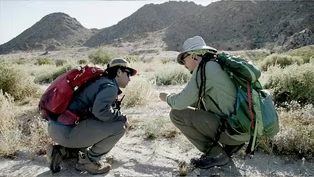
The Fight to Protect the Mojave
Video has Closed Captions
Clip | 7m 58s | The researchers dedicated to protecting the Mojave Desert’s biodiversity. (7m 58s)
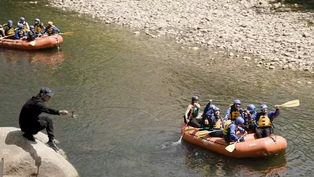
Conservationists and Communities Fight to Protect the Kern River
Video has Closed Captions
Clip | 8m 27s | The California River that’s loved, drained and overrun and the people fighting to defend it (8m 27s)
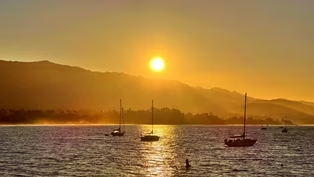
Preserving Ocean Life on the California Coast
Video has Closed Captions
Clip | 7m 13s | Setting sail to learn about efforts to protect marine ecosystems in the Santa Barbara Channel. (7m 13s)
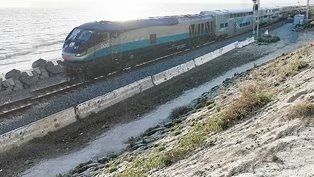
Beach Access and a Threatened Track
Video has Closed Captions
Clip | 7m 13s | As the coastline erodes, what can be done to save the seaside rail link between LA and San Diego? (7m 13s)
A Visit to Carlsbad's Fix-It Clinic
Video has Closed Captions
Clip | 6m 47s | The people who find joy and purpose in repairing the broken items in our lives. (6m 47s)
Sun, Sand and Climate Change: The Fight to Save California’s Coast
Video has Closed Captions
Clip | 6m 53s | What’s being done to save Southern California’s beaches from being washed away for good? (6m 53s)
How to Create a Sustainable, Zero Waste Meal Plan
Clip | 7m 11s | A climate change activist tells us how to create a more sustainable kitchen. (7m 11s)
The Community That Transforms Food Scraps Together, Stays Together
Video has Closed Captions
Clip | 5m 50s | L.A.’s garden activists create a composting movement. (5m 50s)
Meet the People Rescuing Food, Feeding Neighbors & Helping the Climate
Video has Closed Captions
Clip | 6m 32s | Saving perfectly good food from dumpsters (6m 32s)
Video has Closed Captions
Clip | 6m 27s | We explore why enough water couldn’t be pumped through fire hydrants to protect homes from burning. (6m 27s)
Goodbye Plants, Hello Fire Safety
Video has Closed Captions
Clip | 7m 53s | Controversial proposal to protect homes from wildfires by forcing homeowners to remove vegetation. (7m 53s)
Can You Build a Fire-Proof Home?
Video has Closed Captions
Clip | 7m 46s | How to rebuild after L.A.’s devastating wildfires. (7m 46s)
Earth Focus Environmental Film Festival 2023 (Preview)
Preview | 30s | The fifth annual Earth Focus Environmental Film Festival features five days of screenings. (30s)
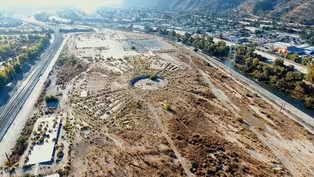
Clip | 8m 17s | Taylor Yard is now an undeveloped and still-contaminated site adjacent to the L.A. River. (8m 17s)
Earth Focus Environmental Film Festival
Preview | 1m 18s | Earth Focus Environmental Film Festival (1m 18s)
Cold Rush? The Changing Arctic
Clip | 14m 41s | "Earth Focus" looks at the changing face of the Arctic today. (14m 41s)
Fukushima: Can it Happen in the US?
Clip | 7m 21s | Fukushima was not a Japanese nuclear disaster. (7m 21s)
Cambodia: Fight for Areng Valley
Clip | 10m 47s | The Chong people are fighting to protect their forests. (10m 47s)
Inside Illicit Ivory and Rhino Horn Trade
Clip | 6m 41s | Inside Illicit Ivory and Rhino Horn Trade (6m 41s)
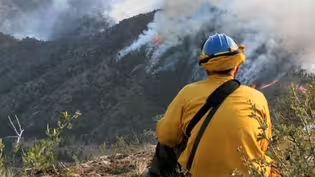
Unacceptable Risk: Firefighters on the Frontline
Clip | 12m 52s | Fires are becoming more frequent, larger and more devastating than ever. (12m 52s)
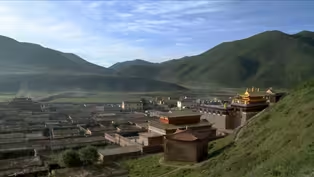
China: Religion and Environment
Clip | 13m 37s | Filmmakers Gary Marcuse and Shi Lihong capture a surprising trend in China. (13m 37s)
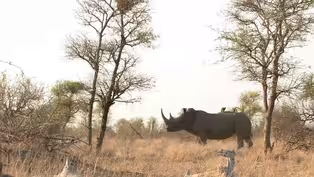
Hope for Rhinos? New Approaches to Save Endangered Species
Clip | 14m 31s | Rhino horn is more expensive than gold or platinum. (14m 31s)
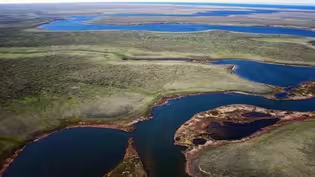
Making Coastal Communities More Resilient to Extreme Weather
Clip | 5m 48s | Joshua Saks looks at how America's communities can be protected. (5m 48s)
Paying for Climate Change: A Reinsurance Industry View
Clip | 6m 32s | Climate change is anticipated to have a big impact on the insurance industries. (6m 32s)
Encroaching Tides: What's at Stake for the US
Clip | 6m 32s | The eastern coast of the United States has one of the highest rates of sea level rise. (6m 32s)
Sacred Economics: A Post Money World?
Clip | 11m 55s | Charles Eisenstein speaks to Earth Focus about his new book Sacred Economics. (11m 55s)
Neonics: Toxic Until Fully Tested
Clip | 8m 58s | Scott Hoffman Black speaks about the impact of neonicotinoid pesticides. (8m 58s)
Neonics: Driving Declines in Biodiversity
Clip | 8m 26s | Dr. David Goulson speaks about the impact of neonicotinoid pesticides. (8m 26s)
Clip | 5m 43s | Earl Blumenauer talks about why protecting pollinators in the US is the national interest. (5m 43s)
Clip | 11m 29s | Shrimp farmers tell us to reject contaminated shrimp from Bangladesh. (11m 29s)
Killing the Senate Filibuster Could Inspire Bipartisanship
Clip: Special | 27m 36s | Jon Christensen moderates a conversation with former Nevada Sen. Harry Reid. (27m 36s)
Sen. Cortez Masto: Pursuing a Green Economy
Video has Closed Captions
Clip: Special | 1m 9s | Cortez Masto has a goal to grow a clean energy economy that includes jobs for the future. (1m 9s)
Sen. Cortez Masto: Protecting the Outdoors is Nonpartisan
Video has Closed Captions
Clip: Special | 37s | Protecting the environment should not be considered a partisan issue, Cortez Masto says. (37s)
Sen. Cortez Masto: On Reid’s Environmental Legacy
Video has Closed Captions
Clip: Special | 54s | Sen. Harry Reid struck a balance when crafting inclusive environmental policy, she says. (54s)
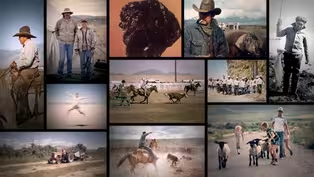
Sen. Cortez Masto: On Growing Up in Rural Las Vegas
Video has Closed Captions
Clip: Special | 40s | Cortez Masto grew up in a rural Las Vegas with cowboys and ranches. (40s)
Sen. Cortez Masto: ‘A Microcosm of America’
Video has Closed Captions
Clip: Special | 1m 17s | Sen. Catherine Cortez Masto describes her state’s role in national politics. (1m 17s)
The New West and the Politics of the Environment (Preview)
Video has Closed Captions
Preview: Special | 1m | A quiet, little-known revolution is taking place in American environmental politics. (1m)
Providing Support for PBS.org
Learn Moreabout PBS online sponsorship New Episode
- News and Public Affairs

Top journalists deliver compelling original analysis of the hour's headlines.
 New Episode
- Drama

Benjamin Wainwright stars as Maigret in the contemporary adaptation of Georges Simenon's novels.
 Recently Added

 New Episode

 New Season






Support for PBS provided by:
Earth Focus is a local public television program presented by PBS SoCal