
A New Dwarf Planet Hiding in Our Solar System?
Clip: Season 53 | 6m 52sVideo has Closed Captions
Meet 2026 ED138, an incredibly bright object beyond Pluto, billions of miles away from Earth.
A team of scientists spotted it for the first time using the new Vera C. Rubin Observatory in Chile, equipped with an 8.4 meter telescope that has the world’s largest digital camera. But how was it able to stay hidden for so long?
Problems playing video? | Closed Captioning Feedback
Problems playing video? | Closed Captioning Feedback
National Corporate funding for NOVA is provided by Carlisle Companies. Major funding for NOVA is provided by the NOVA Science Trust and PBS viewers.
Support provided by:


A New Dwarf Planet Hiding in Our Solar System?
Clip: Season 53 | 6m 52sVideo has Closed Captions
A team of scientists spotted it for the first time using the new Vera C. Rubin Observatory in Chile, equipped with an 8.4 meter telescope that has the world’s largest digital camera. But how was it able to stay hidden for so long?
Problems playing video? | Closed Captioning Feedback
Where to Watch NOVA
NOVA is available to stream on pbs.org and the PBS app.
NOVA Labs
NOVA Labs is a free digital platform that engages teens and lifelong learners in games and interactives that foster authentic scientific exploration. Participants take part in real-world investigations by visualizing, analyzing, and playing with the same data that scientists use.Providing Support for PBS.org
Learn Moreabout PBS online sponsorshipA new dwarf planet may have just been found in our Solar System, lurking in plain sight.
This object is unusually bright.
Most objects this bright should have been discovered in the past.
For now, it's called 2026 ED138.
It's about 1.1 billion miles beyond Pluto, in the Kuiper Belt, and bright.
Amateurs, they can see it with relatively small telescopes.
How did scientists find it?
Why has everyone missed it until now?
And what does this all mean?
We're going to start rewriting the textbooks of what we know about the Solar System.
A dwarf planet is basically a baby planet.
It's mostly round like a planet and orbits the sun like one.
The whole dwarf planet category came into existence once new objects that were as large as Pluto were discovered back in the early 2000s.
Yep, these dwarf planets are responsible for Pluto's demotion.
The only reason they're not considered major planets is because they're too small and gravitationally weak to clear other stuff out of their orbit around the sun.
So far, there are only five officially recognized dwarf planets: Ceres, Makemake, Haumea, Eris, and of course, Pluto.
Why are we only finding this new candidate now?
Because it was hiding inside of the Galactic plane.
The Galactic plane is actually just what you're seeing when you look up at the night sky at the Milky Way.
It appears as a dense, milky band of stars because you are looking through the disc of our galaxy.
There's just a lot more stars there, so it's a lot harder to pick out one that's moving.
Then, in 2025, a powerful new telescope started observing the night sky, one that promises to change our understanding of the cosmos: the Vera C. Rubin Observatory, with a gigantic 8.4-meter telescope perched on a mountaintop in Chile.
Its goal, its sole purpose, is to survey the sky.
What Vera Rubin can do is every three nights, it can observe the entire visible sky from its location in Chile, record everything that's there down to the faintness levels that used to be associated only with the largest telescopes and space telescopes.
After a full year of continuous operation, it's expected to collect more data than all previous optical telescopes combined.
Computer algorithms can quickly pull out objects that seem to move, so-called transients.
But it's much trickier to identify which, if any, are dwarf planets moving through space.
This is where the fun begins.
How do you figure out which of these dots go together?
We call it the linking problem because we're trying to link together all of these detections.
The telescope doesn't show objects making clear paths, just a series of a bunch of dots that have moved.
This is where clever new algorithms come in.
What we do is we just hypothesize an orbit.
We just say, "Okay, if we're going to look for objects that have an orbit like this," and if it has that orbit, we can say, "Okay, for each of these dots, where would we see it?"
In case you're wondering if AI does this?
No, not really.
The fundamentals were all developed before.
It's used some in vetting and managing lists of candidates, but not in the core algorithms.
They're all in this notebook.
In the case of finding 2026 ED138, Matt and Kevin's team used hypothetical orbits to match the data, and soon they got a hit.
We saw that, and then?
Scientists are almost all skeptics.
I get excited about possible discoveries, but I think, "Okay, this is probably not true."
What's different in this case is that usually you're able to poke a hole in the thing that you think you found that was an oddball thing to find.
Kevin and I went through a bunch of those things until we realized, "Okay, now we can't shoot this one down."
And then I sent a message to Mario.
And Matt says, "I think we have a dwarf candidate."
And my first reaction is, "Okay, let's find the bug that created this candidate."
But then you look at the data.
The team was able to get more images from Rubin beyond the initial images that alerted them to the candidate.
It kept turning up in just the right spot.
Then they went further.
You think to yourself, "Well, this object is so bright.
It must have been observed before."
And then you go through all the archives that you can find in the world to try to dig out older images.
They were able to spot it in images taken in 2016 from the Blanco Telescope.
We know now how this object has moved over more than 11 years, and when you know that, you know a lot about what this object is.
It snowballs in crazy 72 hours of work, and you go from zero to knowing a lot about this object in a matter of hours.
It's a blast.
It was super fun.
It was worth every minute of it.
2026 ED138 is still considered only a candidate dwarf planet.
To become officially the sixth dwarf, scientists next need to prove that it's round, and we still don't know how big it is or what it's made of.
But now that it's been found, more targeted research can begin.
We're immediately thinking about, "Okay, what other telescopes?
What other observations can we do?"
How big is it?
What is it made of?
Does it have a moon?
Does it have what's called a family of objects around it?
How did it get there?
Are there more objects like this?
Answering these questions will help astronomers understand how our Solar System formed.
Our planetary system in particular, it's still a mystery how it all began.
The more objects we find in the outer Solar System, they're remnants, they're breadcrumbs from that early times of planet formation.
Every time we find a new one like this, it gives us another piece of the puzzle as to what's been going on here.
For the team behind the Rubin Observatory, it's an indication that we're only at the beginning of a new chapter of discovery.
The public doesn't quite realize yet about what's coming, but there's a tidal wave of discoveries in the Solar System coming from this telescope.
If you want to learn more about the discoveries coming out of the Vera C. Rubin Observatory and the technology behind the telescope, check out NOVA's long-form documentary film, Universe in Motion, premiering December 16th, 2026 on PBS.
 Now Playing
A New Dwarf Planet Hiding in Our Solar System?
Video has Closed Captions
Clip: S53 | 6m 52s | Meet 2026 ED138, an incredibly bright object beyond Pluto, billions of miles away from Earth. (6m 52s)

Would a Penny Dropped from the Empire State Building Kill You?
Video has Closed Captions
Clip: S53 | 5m 52s | Falling is more complicated than you might think. (5m 52s)
Is There a Center of the Universe?
Video has Closed Captions
Clip: S53 | 5m 56s | Physics says the universe is centerless, but a cosmic alignment has scientists asking questions. (5m 56s)

Cats Accidentally Solved a Physics Mystery
Video has Closed Captions
Clip: S53 | 6m 17s | Falling cats seem to break the rules of motion, but the real explanation is stranger than it looks. (6m 17s)

The (Persistent) Illusion of Centrifugal Force
Video has Closed Captions
Clip: S53 | 5m 55s | Here’s why centrifugal force is considered a “fictitious” force. (5m 55s)

The Battle to Breathe: The Last 10%
Video has Closed Captions
Clip: S53 | 18m 6s | Inside the race to bring life-saving genetic therapies to every person living with cystic fibrosis. (18m 6s)
The Battle to Breathe: CF Before Birth
Video has Closed Captions
Clip: S53 | 15m 51s | Inside one mother's fight to ensure a healthy life for her child with cystic fibrosis. (15m 51s)

The Mind-Bending Physics of Origami
Video has Closed Captions
Clip: S53 | 5m 52s | A simple fold can completely change how a material behaves. (5m 52s)

Video has Closed Captions
Clip: S53 | 5m 49s | Modern physics and imaging techniques are finally solving the mystery. (5m 49s)

Why Earth’s Core Is Younger Than Its Surface
Video has Closed Captions
Clip: S53 | 6m | Time isn’t the same for everyone, according to Einstein. (6m)

The Truth about Quantum Computers
Video has Closed Captions
Clip: S53 | 6m 44s | Microsoft's breakthrough in quantum computing could have a huge impact on science, and our future. (6m 44s)

The Problem That Broke Physics (And Led to Chaos)
Video has Closed Captions
Clip: S53 | 6m 12s | The “butterfly effect” is often cited in pop culture, but it’s actually rooted in physics and chaos. (6m 12s)

The Ocean Wave Scientists Thought Was Impossible
Video has Closed Captions
Clip: S53 | 5m 46s | These massive walls of water may be far more common than we once believed. (5m 46s)
Is Electricity Instant? A Shocking Experiment from 1746
Video has Closed Captions
Clip: S53 | 5m 56s | It’s taken over 250 years of shocking experiments to understand how quickly electricity moves! (5m 56s)

Does Notre Dame Sound Different Now?
Video has Closed Captions
Clip: S53 | 6m 8s | Restoring Notre Dame wasn’t just about stone and stained glass. (6m 8s)

Evolution: Brain Power Preview
Video has Closed Captions
Preview: S53 Ep13 | 1m | The story of the dolphin reveals how intelligence evolved, step by step, over billions of years. (1m)
Video has Closed Captions
Preview: S53 Ep12 | 30s | Inside the escalating military struggle to control space and the satellites we rely on. (30s)
Video has Closed Captions
Preview: S53 Ep11 | 30s | Step into the stunning cave that’s reshaping our understanding of prehistoric art. (30s)

Video has Closed Captions
Preview: S53 Ep10 | 30s | Witness how Native North Americans have generated scientific knowledge over thousands of years. (30s)

Video has Closed Captions
Preview: S53 Ep9 | 30s | Follow the relentless quest that led to a breakthrough treatment for a deadly disease. (30s)
Video has Closed Captions
Preview: S53 Ep7 | 30s | Follow the Artemis mission to bring humanity back to the Moon for the first time since Apollo. (30s)

Athens: Birth of Democracy Preview
Video has Closed Captions
Preview: S53 Ep8 | 30s | Archaeologists investigate the dramatic origins of democracy in ancient Greece 2,500 years ago. (30s)

Stone Age Temple Mystery Preview
Video has Closed Captions
Preview: S53 Ep6 | 30s | Surprising evidence at the world’s oldest temple overturns our understanding of human history. (30s)

Video has Closed Captions
Preview: S53 Ep5 | 30s | A deadly—and growing—global weather phenomenon mystifies scientists. (30s)
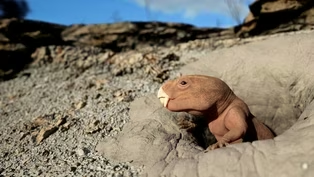
Video has Closed Captions
Preview: S53 Ep4 | 30s | Explore mammals’ surprising origins, long before the age of dinosaurs. (30s)

Video has Closed Captions
Preview: S53 Ep3 | 30s | Do speech buttons really allow dogs to talk to us? Scientists investigate. (30s)

Angkor: Hidden Jungle Empire Preview
Video has Closed Captions
Preview: S53 Ep2 | 30s | New evidence sheds light on the remarkable life—and mysterious collapse—of the ancient jungle city. (30s)
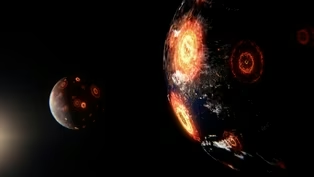
When Earth Was Bombarded by Asteroids
Video has Closed Captions
Clip: S53 Ep1 | 3m 41s | What studying the surface of the Moon revealed about Earth’s apocalyptic youth. (3m 41s)
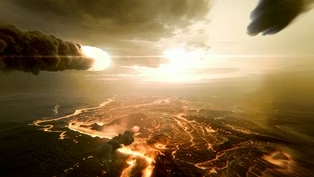
Asteroids: Spark of Life? Preview
Video has Closed Captions
Preview: S53 Ep1 | 30s | What if violent asteroid impacts actually jump-started life on Earth? Explore a dramatic theory. (30s)
Providing Support for PBS.org
Learn Moreabout PBS online sponsorship New Episode
- Science and Nature

Capturing the splendor of the natural world, from the African plains to the Antarctic ice.






 New Episode





Support for PBS provided by:
National Corporate funding for NOVA is provided by Carlisle Companies. Major funding for NOVA is provided by the NOVA Science Trust and PBS viewers.